


Long before professional players walked onto illuminated stages, video-game competition existed wherever people compared scores, challenged one another at an arcade cabinet or tried to prove who understood a game most completely. The earliest events had no permanent team organisations, international broadcasts or player-transfer markets, yet they already contained the essential idea: consistent digital rules could turn skill into a result that other people recognised.
That skill has never taken one form. Arcade players learnt patterns and scoring routes, speedrunners searched for faster ways through software, fighting-game competitors studied spacing and opponent habits, while shooter and strategy teams developed communication, map control and resource management. Modern games add drafting, coaching, replay analysis and frequent balance changes, but none of those practices replaces the older traditions that continue beside them.
Competitive gaming therefore did not develop as a single uninterrupted industry. High-score chasing, speedrunning, fighting games, first-person shooters, real-time strategy, sports simulations, multiplayer online battle arenas and mobile titles formed communities with different rules and institutions. Some remain open-entry and community-led; others operate through publisher-controlled leagues in which access to the game, broadcast and competitive calendar belongs to one company.
The term esports is most useful for the organised end of this activity, where recurring competition, identifiable players or teams, officials and spectators form a recognisable structure. The boundary remains imprecise. A local Street Fighter bracket, a speedrunning race, a Counter-Strike major and a record attempt on an original arcade cabinet are all competitive gaming, but they do not share one culture, business model or governing body.
Tracing the move from arcades to arenas consequently requires more than listing large prize funds. It means examining how scoreboards created asynchronous rivalry, how networks allowed direct competition at a distance, how broadcasts taught audiences to follow complex matches, and how publishers gained unusual control over the playing field. It also means looking at the less visible systems around the stage: contracts, coaching, safeguarding, integrity and the preservation of games that may change whenever a server closes or a patch is released.
Competitive gaming and esports overlap, but they are not exact synonyms.
Competitive gaming includes informal score challenges, speedrunning and local brackets as well as professional leagues. Esports normally describes the more structured portion, involving formal rules, recurring events, spectatorship and recognisable competitors.
Competitive Gaming At A Glance
| Period | Important Developments | Representative Games Or Events | Why It Mattered |
|---|---|---|---|
| 1970s | University tournaments and early public score competition. | Spacewar!, Pong and the first commercial arcades. | Digital rules proved capable of producing observable competition and recognisable winners. |
| Early 1980s | National promotional events and specialist record keeping. | Atari's Space Invaders Championship and Twin Galaxies. | Competition moved beyond one venue and required common settings, evidence and trusted officials. |
| Late 1980s–early 1990s | Console tours, television challenges, speed records and head-to-head arcade play. | Nintendo World Championships, Tetris, GamesMaster and Street Fighter II. | Gaming skill became easier to package for touring events, television and live crowds. |
| Mid-to-late 1990s | LAN parties, internet play, shooter tournaments and early professional leagues. | Doom, Quake, Red Annihilation, PGL and CPL. | Networks allowed each competitor to use a separate machine while sharing one match. |
| Late 1990s–2000s | Korean television leagues, sponsored teams and international multi-game circuits. | StarCraft, WCG, ESL, ESWC and Counter-Strike. | Regular seasons, travel, broadcasters, coaches and team organisations formed a recognisable industry. |
| 2000s console era | System-link tournaments, console circuits and televised team competition. | Halo, Major League Gaming, sports simulations and fighting games. | Organised competition expanded beyond PC cafés and LAN halls into home-console communities. |
| 2010s | Livestreaming, publisher leagues, crowdfunding and arena finals. | Twitch, Games Done Quick, League of Legends, Dota 2 and Fortnite. | Global online audiences became central to recognition, funding and tournament economics. |
| 2020s | Mobile growth, multi-title club championships and stronger attention to governance and welfare. | Valorant, Counter-Strike 2, mobile circuits and the Esports World Cup. | Competitive gaming now spans professional, amateur, educational, community-led and centrally funded ecosystems. |
These periods overlap rather than replace one another. Arcade records, speedrunning, fighting-game locals, LAN events and international professional leagues remain active at the same time, so the history is cumulative. New technology changes who can participate and how an audience watches, but older forms of competition often survive because their communities still value the particular skills and traditions they measure.
What Counts As Esports?
There is no universal point at which competitive gaming becomes esports, and a stadium or enormous prize fund is not a useful dividing line. Organised esports normally combines a repeatable game, agreed rules, identifiable competitors, qualification or league structures, result verification and an audience that understands why the result matters. A modest volunteer-run circuit can satisfy those conditions more convincingly than a heavily funded exhibition with no continuing competitive community.
Competition Can Be Direct Or Asynchronous
Two opponents do not need to play at the same moment. Arcade records and speedruns allow one person to establish a score or time that another may challenge months later, provided the hardware, game version, settings and evidence are comparable. Direct competition introduces different pressures because each player changes the other's decisions: fighting games, strategy titles and shooters depend on adaptation, deception and risk in ways that a fixed scoring route does not.
Spectatorship Requires More Than A Good Game
A game can be demanding to play yet difficult to follow. Effective broadcasts need observer tools, readable interfaces, replays and commentary capable of explaining incomplete information or several simultaneous actions. Tetris communicates danger through a visibly rising stack, whereas a ten-player strategy game may require analysts to explain why a small resource advantage now could decide a team fight several minutes later. Spectator design has consequently become a specialised layer alongside the player interface.
Commercial Scale Is Not Competitive Health
Prize money creates headlines but does not reveal whether ordinary competitors can find regular events, receive winnings promptly or progress through fair qualification. A sustainable scene also needs reliable administration, consistent rules, player treatment, understandable broadcasts and a game that people still want to practise. Large investment can improve production, yet it can disappear quickly when sponsors, publishers or audiences change direction.
The useful question is not whether every event deserves the esports label.
It is whether the competition has dependable rules, meaningful results, a community capable of interpreting those results and an infrastructure that treats participants fairly.
From University Laboratories To Arcade Scoreboards
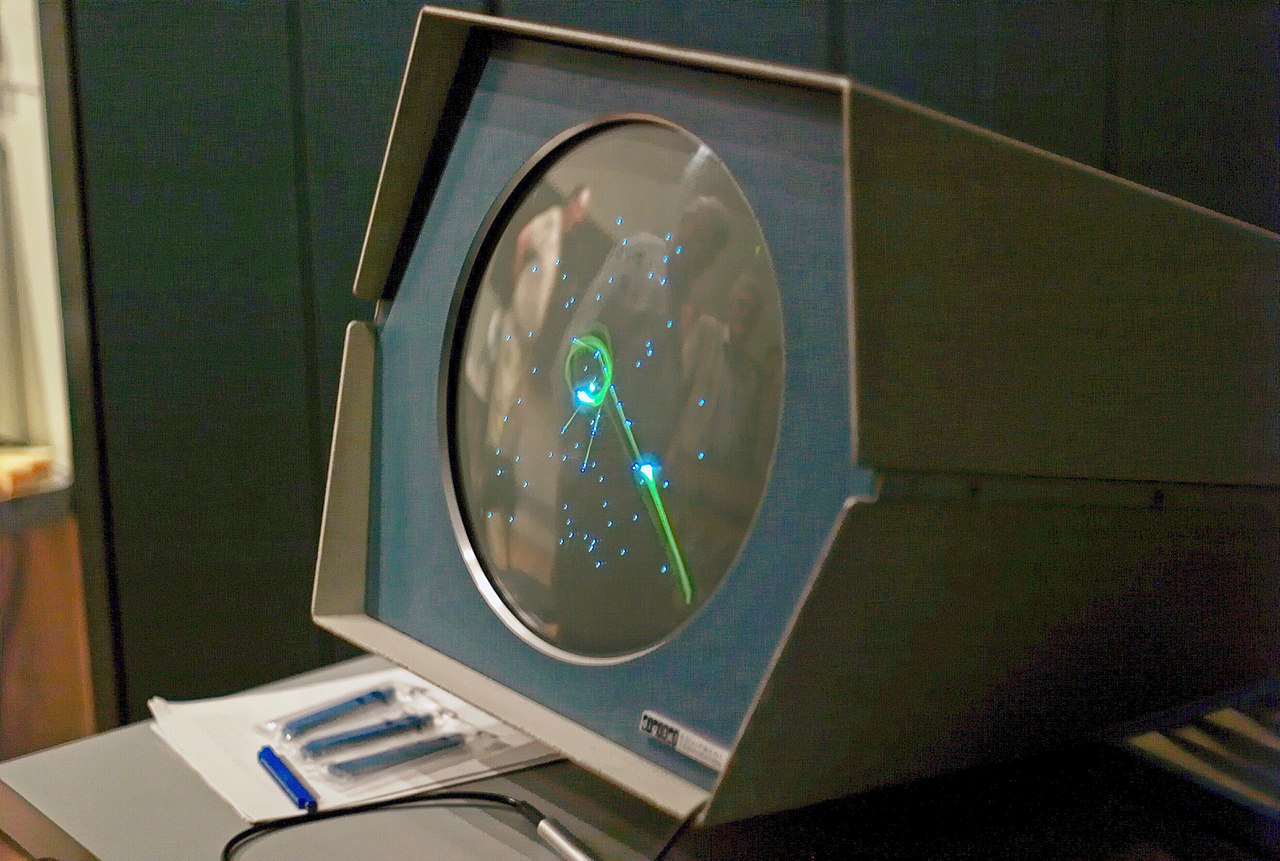
One of the earliest documented video-game tournaments took place at Stanford University's Artificial Intelligence Laboratory on 19 October 1972. The game was Spacewar!, developed at MIT during the early 1960s for the PDP-1. Two spacecraft fought around a gravitational star, and the Stanford event organised that contest into a free-for-all, singles matches and team play before an audience drawn from the surrounding computer culture.
Bruce Baumgart won the five-player free-for-all, Slim Tovar won the singles competition, and Tovar partnered Robert E. Maas to take the team event. The advertised prize was a year's subscription to Rolling Stone, with beer also provided. It was not the beginning of a continuous professional industry: access to the machine was highly restricted and the reward could not support a career. Its importance lies in showing that formal competition, spectators and reporting appeared as soon as a community gained regular access to an interactive game.

Arcades Made Performance Public
Commercial arcades brought competitive gaming out of specialist laboratories. A cabinet occupied shared space, every attempt normally cost money and a strong player could remain on one credit far longer than a beginner. High-score tables converted survival, accuracy and route efficiency into a visible number, allowing initials on a screen to produce rivalry between friends, neighbouring venues or players who never met.
Those scores were useful because they reduced a complex performance to a target, but comparison was unreliable outside one machine. Difficulty switches, extra-life thresholds, regional versions and software revisions could all change a result, while a power cycle might erase the evidence completely. As players began to claim national and world records, competition needed rules, witnesses and record keepers rather than only an impressive number on a local display.


The 1980 Space Invaders Championship
Atari's 1980 national competition showed that a video-game tournament could recruit participants across the United States. It promoted the Atari VCS conversion of Taito's arcade hit rather than using the coin-operated original, with more than 10,000 players entering regional events. Five finalists reached Warner Communications' offices in New York, where teenager Rebecca Heineman won what is widely recognised as the first large national video-game tournament in the country.
The event matters for both competition and commerce. Standard consumer hardware allowed regional qualification to feed into a national final, giving the winner a clear journey from local entry to recognised title. Atari simultaneously used the tournament to market its console and game. That dual purpose remains familiar: a tournament may be deeply meaningful to its players while functioning as promotion for the publisher, platform or sponsor that finances it.
Twin Galaxies & Trusted Records
Walter Day opened the Twin Galaxies arcade in Ottumwa, Iowa, in 1981 and began compiling scores from different venues. A credible record required the game version, cabinet settings, lives, continues and evidence to be documented, turning rule keeping into competition infrastructure. Magazines carried the resulting tables beyond the original arcade, allowing a recognised target and player identity to circulate nationally.
Twin Galaxies and the American television programme That's Incredible! co-sponsored the North American Video Game Olympics in January 1983. Nineteen leading players competed across Frogger, Millipede, Joust, Super Pac-Man and Donkey Kong Jr., with Ben Gold taking the strongest overall result. The multi-game format and a named champion provided television with a clearer story than a group of unrelated scores.
A record is inseparable from its rules.
The number alone cannot show whether two performances used the same game revision, difficulty, starting lives or permitted techniques. Verification has changed from witnesses and videotape to replays and server logs, but competitive trust still depends on transparent comparison.
Speedrunning & Competition Against The Clock
Speedrunning extends record competition from score to completion time. The apparent question—how quickly can a game, level or defined objective be finished—conceals years of shared research into movement, loading behaviour, enemy patterns, random-number generation and programming faults. A record can change because someone executes an existing route more precisely, discovers a new glitch or learns how to manipulate an event that previously appeared unpredictable.
Categories Make Different Achievements Comparable
One game can support several legitimate forms of competition. Any% usually means reaching a defined ending as quickly as possible without completing every objective, while 100% requires the community's agreed level of completion. Glitchless rules restrict selected programming exploits, and individual-level tables isolate one stage. The labels are convenient rather than universal: each community must define its own finish point, permitted versions and allowed techniques.
Timing also needs a published method. Some leaderboards use real time from the first input to the final result, while others rely on an in-game timer or remove loading periods so that storage devices and computer performance do not determine the winner. Regional releases and patches can create substantial differences, making the platform and software revision part of the category rather than incidental technical detail.
Verification Is Usually Community-Led
Modern leaderboards commonly require video evidence, the platform, game version, category and final time. Volunteer moderators compare a submission with the published rules and may reject incomplete evidence, prohibited modifications or a run entered into the wrong category. Most attempts are asynchronous, yet each accepted time becomes a new target; live races then add direct pressure by asking runners to recover when an error makes the planned route impossible.
Games Done Quick Built A Spectator Format
The first Games Done Quick marathon, originally called Classic Games Done Quick, took place in January 2010. Its broadcasts paired runners with commentators who explained routes, risks and techniques to viewers unfamiliar with the category. Donation incentives, races and unusual challenges turned specialised play into a wider community programme, and by July 2026 the organisation's public tracker recorded more than $62 million raised across its events.
Speedrunning is not always described as esports because it normally lacks salaried teams, publisher-run leagues and transfer markets. Its rules and archives are frequently maintained by volunteers, with many runners pursuing records and community recognition rather than prize money. It nevertheless contains formal categories, verification, live events, expert commentary and recognised leaders, making it essential to any broad history of competitive gaming.
Television, Nintendo & The Fighting-Game Community
Console manufacturers and television producers experimented with game competition during the late 1980s and early 1990s. Nintendo's 1990 World Championships toured American cities before national finals, using a special NES cartridge that combined timed sections of Super Mario Bros., Rad Racer and Tetris into one score. The format ranked players within age divisions while surrounding the competition with demonstrations and company marketing.
British television followed a different model. Channel 4 launched GamesMaster in 1992, mixing reviews and features with short challenges judged by a score, time limit, specific task or direct match. The Golden Joystick gave winners a recognisable prize, while clear objectives allowed viewers to understand a challenge that might last only minutes. Conventional schedules encouraged concise, edited formats rather than the complete multi-hour series later made possible by online broadcasting.
Street Fighter II Turned The Opponent Into The Content
The release of Street Fighter II in 1991 changed arcade competition because two people faced one another on the same cabinet and the loser normally surrendered the controls to the next challenger. A strong player could hold the machine through a queue of opponents, creating an informal bracket before an organiser had announced a tournament. Spacing, timing, character knowledge and adaptation made human decisions the source of continuing variety.
Local arcades developed their own terminology, preferred strategies and reputations because players repeatedly met the strongest competition available in one area. Larger events then tested those assumptions against unfamiliar regions. Battle by the Bay gathered 40 competitors at Sunnyvale Golfland in 1996 for Super Street Fighter II Turbo and Street Fighter Alpha 2; later editions expanded and became the Evolution Championship Series, usually known as Evo.


Evo and many fighting-game events retain open brackets, giving an unknown entrant a route through pools to a recognised professional without first joining a franchise or being invited by a publisher. Competition moved increasingly to consoles, but side-by-side play, short sets, local gatherings and community-defined rules preserved the social inheritance of the arcade. The fighting-game community is therefore not one centrally operated esport; it is an overlapping network of games, organisers and regional scenes.
Fighting games provide one of the clearest links between the arcade and the arena.
The equipment and venues changed, but open entry, direct local play and community knowledge remained central to how competitors developed and earned recognition.
Doom, Quake & Networked Competition
Arcade and console opponents usually shared one cabinet or television. Networked computers gave every player a separate display, controls and viewpoint while placing them inside the same virtual space. Doom, released in 1993, helped popularise competitive deathmatch over local networks, and players began transporting desktop towers, heavy monitors, keyboards and cables to gatherings that combined social play with organised tournaments.
A local area network offered lower and more predictable delay than early dial-up internet, while a shared venue allowed organisers to supervise equipment and standardise connections. Online servers could still connect practice partners who lived far apart, but important finals increasingly returned to LAN conditions so that one unstable household connection did not decide the result. That split between remote qualification and controlled live finals remains common.


Quake Created A New Kind Of Mechanical Skill
Quake expanded the speed, vertical movement and three-dimensional control expected from competitive shooters. A leading player needed precise aim, but also knowledge of weapon, armour and health-item timings, efficient routes and an understanding of when an opponent was likely to be weak. Because a first-person view reveals only one competitor's information, spectators required player switching, map overviews and commentary to explain control of spaces and resources.
The 1997 Red Annihilation tournament gave this form of play a highly visible champion. Approximately 2,000 entrants competed through online one-on-one qualifiers before 16 players reached the live E3 finals in Atlanta. The event used the Rendition-accelerated vQuake release on Intergraph hardware; Dennis “Thresh” Fong defeated Tom “Entropy” Kimzey and received id Software co-founder John Carmack's Ferrari 328 GTS as the headline prize.
Professional Leagues Used Sporting Language Before Income Was Stable
The Professional Gamers League and Cyberathlete Professional League both emerged in 1997. Words such as league, athlete, season and professional deliberately presented gaming as trained competition, while recurring events established expectations around sponsors, standard equipment and international travel. The CPL ran tournaments for games including Quake, Counter-Strike and Warcraft III, helping competitors and teams build identities across more than one isolated event.
Professional branding did not mean every participant could make a living. Prizes and sponsorship were concentrated among a small group, while many players paid for their own equipment and travel. Organisers depended on publishers, sponsors, ticket sales and continuing interest in particular games, so a prominent circuit could shrink quickly when one part of the arrangement failed. The same tension between professional presentation and unstable employment continues throughout esports.
South Korea & The First Global Circuits
South Korea became central to modern esports during the late 1990s and early 2000s through the interaction of infrastructure, venues, television and corporate support. Fast broadband mattered, but it was not sufficient by itself. Densely populated cities and affordable PC bangs gave players access to networked machines by the hour, creating social spaces where local ability could be recognised without requiring everyone to own a powerful computer or transport equipment to a temporary LAN.
StarCraft Arrived In The Right Environment
Blizzard released StarCraft in 1998. Three asymmetric factions, hidden information, economy management and demanding real-time control produced matches with significant strategic variety. Players could specialise in one faction yet continually adjust build orders, scouting and unit control to the opponent, making regular competition capable of generating fresh analysis rather than merely repeating a solved sequence.
Specialist television channels turned those matches into scheduled programming with commentators, player profiles, studios and continuing leagues. Corporate teams supported training houses, practice partners and coaching, allowing leading players to become public figures. The result was not simply a tournament with a large final; it was a recurring competitive culture in which viewers followed form, rivalries and strategic change across a season.


International Multi-Game Events Connected Regional Scenes
The World Cyber Games Challenge in 2000 brought national representatives together in official medal competitions for Quake III Arena, StarCraft: Brood War, Age of Empires II and FIFA 2000. The Electronic Sports World Cup followed in 2003 with team-based Counter-Strike and individual competition in games including Warcraft III, Unreal Tournament 2003 and Quake III Arena, alongside a separate women's Counter-Strike discipline.
Multi-game events created a common stage without making every title equivalent. A national delegation might include a one-on-one strategy player, a complete shooter roster and a football-simulation competitor, each using different rules and qualification routes. International travel also exposed gaps in governance: players needed visas, dependable prize payments, contracts and support in unfamiliar countries before the surrounding institutions were consistently capable of providing them.
ESL, founded in 2000, developed from online leagues into recurring international competitions, while other organisers built their own calendars and broadcast identities. The important shift was institutional memory. Rules, seeding, technical administration, player registration and event production increasingly survived from one tournament to the next, making competition less dependent on an improvised group starting again each time.
South Korea's influence came from an ecosystem, not one game.
Broadband, PC bangs, television, corporate teams and a concentrated player base supported one another. StarCraft supplied a strong competitive game, but the surrounding institutions made regular professional play visible and sustainable.
Team Esports Across PC & Console
Counter-Strike began as a Half-Life modification and developed into one of competitive gaming's longest-running team formats. One side attacks, the other defends, and a short round ends through an objective, elimination or time, yet the series connects those rounds through an economy. A team must decide when to buy fully, accept limited equipment or save resources, so one defeat changes the options available several minutes later.
Information remains incomplete throughout a match. Players use sound, utility, previous behaviour and teammate communication to estimate positions they cannot see, while roles distribute responsibility for leadership, entry timing, support and site defence. Accurate shooting matters, but an elimination table cannot show every valuable contribution: one player may create space, provide information or force an opponent to move without recording the final kill.
The community moved through the original game, Counter-Strike: Source, Global Offensive and Counter-Strike 2. Each technical transition changed movement, maps, weapons or network behaviour and forced organisers to decide when competition should leave a mature older version. Independent tournament companies built much of the event history, while Valve retained ownership of the software and increasing authority over major championships, producing a mixture of open circuit and publisher control.
Halo & Major League Gaming
Console communities developed different tournament routes. Halo combined analogue-stick aiming, shields, weapon control and coordinated movement in a format designed for Xbox, while system-link connections allowed several consoles to share a local match before dependable console internet services became standard. The equipment differed from a PC LAN but the practical principle was the same: competitors gathered in a controlled networked environment.
Major League Gaming, founded in the United States in 2002, became closely associated with Halo and later included fighting games, Call of Duty, sports titles and PC esports. Recurring event stops gave console teams public identities and qualification goals, while the televised Halo 2 Pro Series used player profiles, commentary and edited match coverage to translate unfamiliar team play for a conventional sports audience.
Sports Simulations Carry Familiar Rules But Unusual Instability
Football, basketball, American football and racing games benefit from objectives that many spectators already understand. Their competitive communities must still explain why elite game performance is distinct from the physical sport, and annual commercial releases create a further problem. Players may be required to change to altered physics, controls or tactics each year even when the previous version retains a healthy competitive scene.
That release schedule gives publishers much greater influence than exists in a sport whose fundamental field and rules change slowly. A competitor can master one edition only to find that the official circuit has moved to its successor, making adaptability part of the profession while weakening the long-term stability of records and tactical knowledge.
Streaming, MOBAs & Arena-Scale Competition
Competitive gaming existed long before livestreaming, but online video changed how cheaply and quickly an event could reach an international audience. Earlier broadcasts relied on regional television, downloadable recordings or specialist streams that were difficult to discover. Twitch emerged from the gaming section of Justin.tv as a dedicated service in 2011, combining live video, chat and accessible broadcasting in a format suited to tournaments, speedrunning and individual player channels.
Chat made the audience visible to itself, while channels unconstrained by a television schedule could show group stages, qualifiers and lower brackets across several simultaneous feeds. Players gained an audience beyond formal events by streaming practice and explaining decisions, creating income and public identity alongside new contractual arguments about sponsors, personal content and required broadcast hours. Approved co-streamers later added alternative languages and personalities, although publishers retained control over who could reuse official footage.
League Of Legends & Dota 2
Multiplayer online battle arenas became central to esports during the 2010s. Two five-player teams control individual characters while attempting to destroy an opposing base, combining drafting, mechanical execution, map control, resource allocation and coordinated fights. Riot Games held the first League of Legends World Championship in 2011 and subsequently built regional professional leagues feeding an annual global final, creating stable broadcast narratives while centralising competitive rules under the publisher.
Valve introduced Dota 2 to a wide audience through The International in 2011 with a $1.6 million prize fund. From 2013, Compendium and later Battle Pass purchases contributed to tournament prizes, eventually producing totals in the tens of millions. Those figures generated attention and life-changing rewards for successful teams, but they did not finance every organisation attempting to qualify or guarantee a stable wider circuit.


Battle Royale & Mobile Competition
Battle royale tournaments introduced large fields, uncertain item distribution and changing encounters. Scoring systems combine placement with eliminations so that survival matters without rewarding every team for avoiding contact, and several rounds are required to reduce the influence of one unfortunate start. Epic Games allocated $100 million to competitive Fortnite during 2019, with the World Cup finals at Arthur Ashe Stadium carrying a $30 million prize pool across the event.
Mobile esports expanded participation in regions where a capable smartphone was more accessible than a current console or gaming PC. PUBG Mobile, Mobile Legends: Bang Bang, Free Fire and Honor of Kings developed large regional and international circuits, challenging the assumption that professional competition naturally centres on desktop hardware. Touch controls, device rules and mobile-network conditions became part of tournament administration rather than lesser versions of PC concerns.
The Multi-Game Club Model
The Esports World Cup represents another move towards competition between organisations across unrelated games. Its 2026 rules currently list 25 eligible competitions spanning shooters, MOBAs, fighting games, racing, football, mobile titles and chess. A club must achieve top-eight finishes in at least two competitions to qualify for the Club Championship and must win at least one eligible game-title competition to finish first overall.
The combined table measures organisational breadth, not one universal gaming ability. Different rosters earn points through separate controls, communities and qualification systems, and a club title does not make one player champion of every game. Direct support for selected partner clubs can help organisations field more rosters and create content, while also giving the foundation influence over which brands are best placed to expand.
According to the event's official July 2026 announcement, that year's competition opened in Paris. Whatever the venue, the wider model raises questions about calendar power: a large centrally funded event can affect transfers and encourage clubs to enter selected titles, while communities outside the programme receive none of the same investment. Arena scale is therefore both an achievement in production and a concentration of institutional influence.
A large prize pool does not prove that an esport is financially secure.
Prize money rewards those who reach the event. It does not automatically cover the salaries, coaching, travel and operational costs of every team attempting to qualify, nor does it guarantee that the same circuit will exist next season.
What Professional Players Actually Train
Professional gaming is often reduced to reactions or the number of actions a player can perform each minute. Those measurements can describe one part of performance, but competition usually rewards reliable decisions under pressure rather than isolated speed. A player must connect mechanical execution with game knowledge, communication and an accurate understanding of what opponents are likely to do.
Mechanics & Game Knowledge
Competitors practise aiming, movement, combinations and precise input sequences until they can perform them consistently in a match. They also study maps, character match-ups, equipment values, objective timings and common strategic choices. This knowledge is not static: a patch may alter the strength of a weapon, item or character, forcing teams to test previous assumptions and rebuild portions of their playbook during an active season.
Communication & Defined Responsibility
Team communication must deliver useful information quickly without drowning out a more important call. Players develop shortened language and clear responsibilities for leadership, target selection or tactical decisions. Strong communication also includes listening and knowing when not to speak. A roster of mechanically gifted individuals can fail when several people issue conflicting instructions or nobody accepts responsibility for the final choice.
Replay Review & Opponent Preparation
Recorded matches let players, coaches and analysts identify recurring errors that were difficult to recognise in real time. Review can separate a poor outcome from a poor decision: a sensible plan may fail through execution, while a risky choice can succeed once without becoming a good habit. Opponent study looks for preferred openings, map tendencies and reactions, but preparation must leave room for the other team to adapt.
Psychological & Physical Preparation
Tournament pressure differs from an ordinary ranked queue. A competitor must recover after an error, communicate when losing and perform in front of an audience whose reaction may be audible. Long periods of sitting and repeated hand movements also create physical demands. Serious programmes increasingly consider sleep, exercise, posture, breaks and recovery, although research into evidence-based esports training remains less mature than in long-established physical sports.
More practice is not automatically better practice. Repeating unfocused matches while exhausted can reinforce weak decisions and increase strain. Targeted exercises, structured review and adequate recovery may produce more improvement than maximising the number of hours logged, particularly for young players balancing competition with education or work.
Elite play combines several forms of skill.
Mechanical speed is visible, but preparation also depends on memory, communication, tactical judgement, emotional control and the ability to learn again when the game changes.
Coaching, Contracts & Player Welfare
Professionalisation turns an informal group into a workplace and a grassroots club into an organisation with responsibilities. Being an excellent player does not automatically make someone an effective coach: teaching requires communication, planning and the ability to correct mistakes without humiliating the person making them. Larger teams may separate tactical coaching, data analysis, performance support and management, while smaller organisations often combine several roles.
Safeguarding Extends Beyond The Match
School, college and community competitions place adults in positions of authority over children and young people. Voice chat, private messages and social platforms allow team communication to continue outside formal practice, so professional boundaries, reporting procedures and online safety matter as much as conduct at a venue. Players should know where to report bullying, discrimination or inappropriate behaviour without depending entirely on the person whose conduct is being challenged.
British Esports' Duty to Care work groups these responsibilities around safeguarding, child rights, online safety, cyber choices, mental health, equality, diversity and inclusion, and health and wellbeing. The areas are connected: an unsafe practice culture can damage both welfare and performance, while direct feedback and high standards do not require threats, harassment or excessive training hours.
Open Entry Does Not Guarantee Equal Access
Many major esports circuits do not formally bar women from their principal competitions, although eligibility is determined separately by each publisher and organiser. Formal eligibility is only the first step. Players also need safe practice environments, strong opponents, recruitment networks and organisations willing to support development. Harassment through voice chat or public profiles can drive people away before they accumulate the experience needed to reach higher-level teams, making an apparently open ladder unequal in practice.
ESL Impact launched in 2022 as an all-women Counter-Strike ecosystem with open qualifiers, regional play, cash cups and live global finals. It created regular competition and visible opportunities across player and broadcast roles, but ESL announced in October 2025 that the circuit would be suspended after Season 8 because its economic model was not sustainable. The decision showed both the value and limitation of targeted pathways: visibility can develop talent, but a dedicated circuit also needs durable funding and cannot replace wider action inside mixed competition.
Contracts Define The Professional Relationship
A player agreement should state salary, payment dates, prize shares, sponsorship duties, streaming obligations, image rights, equipment, travel, transfer conditions, termination and any buyout. Verbal assurances cannot safely replace written terms, particularly when the player lives in one country, competes in another and signs for an organisation registered elsewhere. Independent legal advice becomes especially important for minors and cross-border agreements.
Agents may negotiate contracts and approach teams, but the player should understand how the representative is paid and whether the agent also works for a party with conflicting interests. Riot Games has published guidance for EMEA competitors and operates a voluntary independent dispute-resolution process for eligible contractual and financial disagreements in its regional League of Legends and Valorant ecosystems. That system is useful but not universal; players in other games may depend on national courts, private arbitration, tournament rules or player associations.
Competitive pressure does not remove duty of care.
Clear coaching standards, safe reporting routes, appropriate communication boundaries and understandable contracts support performance. They are not optional extras to be considered only after a team becomes successful.
Teams, Money & Publisher Power
A modern esports organisation may employ several unrelated rosters under one brand, but its income rarely comes from one source. Sponsorship, media rights, merchandise, event payments, publisher support, content and investment may all contribute, while salaries, coaching, travel, facilities and administration continue even when a team fails to reach a major prize event. Financial scale on stage can therefore coexist with fragile organisations behind it.
Sponsorship Creates Both Income & Restrictions
Sponsors may pay for jersey placement, broadcast integration, social content or category exclusivity. A tournament and team can hold conflicting agreements, and publishers may prohibit industries or products they do not want associated with the game. Players' personal channels add another layer when an individual has an existing partnership that competes with the organisation's deal. Clear contracts must state who controls which commercial spaces.
Prize Money Is Irregular Revenue
A headline prize usually goes to a small number of teams after months of qualification. Organisations and players need an agreed split, tax planning and prompt payment, but prize success remains too unpredictable to support ordinary operating costs by itself. A healthy ecosystem needs reliable income between major events and realistic spending rather than assuming one championship run will cover an entire year.
The Publisher Owns The Playing Field
No single company owns football, tennis or athletics as complete intellectual property. An esports publisher controls the software, characters, trademarks, audiovisual material and frequently the online service required to play. Tournament organisers may need a licence and can face conditions governing sponsors, formats, broadcasts and prize money. The company can also update the game, reorganise an official league or decide that a particular circuit no longer supports its commercial plans.
A balance patch can weaken a character or change a map after teams have invested months of practice. Annual releases can move the official competition to a successor, while server closure may make continued play technically or legally difficult. Community and publisher priorities can diverge when players prefer an older version for competitive reasons but the owner wants attention on a newer product.
Publisher involvement is not inherently damaging. Central funding can stabilise broadcasts, enforce global rules and support long-term leagues that independent organisers could not finance. The unusual issue is concentration: the same company can own the game, define access to competition, change the rules and remove the service on which the activity depends. Players and teams have limited alternatives when a strategic decision affects the one title around which they built their careers.
Events backed by large institutions introduce another question of reputation. Teams, players and audiences may disagree about sponsors, host countries or the purpose for which an event is being used. Commercial analysis should therefore examine where money comes from, what influence accompanies it and whether participants have meaningful choices, rather than treating every investment as neutral growth.
Esports combines community competition with privately controlled software.
That relationship can fund extraordinary events, but it also allows one owner to alter both the rules and access to the playing field in a way that has no simple equivalent in most established sports.
Competitive Integrity
Competition depends on confidence that the declared result was produced under the agreed rules. Esports inherits familiar problems such as match-fixing while adding technical forms of cheating that can reveal hidden information, automate aim or alter inputs. Anti-cheat software, account monitoring, server logs and replay analysis provide evidence, but none removes the need for investigators who understand the game and the possibility of exceptional legitimate performance.
Hardware, Macros & Exploits
Programmable controllers and peripherals can automate actions that the rules require a player to execute manually, so live events may inspect equipment or supply standard hardware. An exploit creates a different problem because it uses behaviour already present in the game. Organisers must decide whether an unintended technique is accepted advanced play, restricted for one event or serious enough to invalidate a match, and that decision should be published before competitors encounter it wherever possible.
Match-Fixing & Betting
A participant may be offered money to lose a match, manipulate one round or disclose private information. Lower-level competition is particularly vulnerable when betting markets exist but salaries and oversight remain weak. Integrity rules must cover players, coaches, officials and team staff, with evidence standards and appeal processes clear enough that punishment does not depend on rumour or commercial pressure.
Stimulants & Player Health
Concerns about performance-enhancing substances led some organisers to introduce drug policies and testing. The issue is broader than whether one substance improves reactions: legitimate medical treatment, privacy, player health and consistent enforcement all require consideration. A rule copied from physical sport may not fit esports automatically, but having no policy leaves competitors uncertain about both permitted medication and unsafe pressure from a team.
The Esports Integrity Commission grew out of an esports threat assessment conducted in 2015 and was formally founded in 2016 as a not-for-profit body addressing cheating, betting offences, match-fixing, doping and related conduct across participating organisations. It does not govern every publisher, tournament or country. A player sanctioned in one circuit may face a different procedure elsewhere, reflecting the fragmented authority that runs throughout competitive gaming.
Technical evidence still requires human judgement.
Unusual statistics or inputs can indicate wrongdoing, but investigators must also consider game mechanics, software errors, hardware faults, the quality of collected data and the possibility that an extraordinary performance is genuine.
The UK & The Olympic Question
British competitive gaming developed through arcades, home-computer communities, television challenges and LAN events before the modern international esports market. Players compared scores and completion times on the ZX Spectrum, Commodore 64, Amstrad CPC and Amiga, while magazines carried reader challenges beyond one household. GamesMaster made skill, commentary and game personalities visible to a mainstream television audience from 1992 without pretending to be a permanent professional league.
From Insomnia To Education
Insomnia Gaming Festival traces its beginnings to a 300-player LAN event in 1999 and developed into a larger combination of LAN participation, esports tournaments, exhibitions and community activity. British teams later joined global circuits across Counter-Strike, League of Legends, Call of Duty, football simulations and fighting games, although the nationality of an organisation and its international roster rarely remained identical.
British Esports was established in 2016 with a focus on amateur competition, education and national representation, and its Student Champs began in 2018. Esports qualifications later entered schools and colleges, covering production, broadcasting, coaching, event management, design, safeguarding and technical support as well as match play. The useful educational case is not a promise that every student can become a professional player, but access to the many transferable roles needed to run an event.
Esports Is Not One Olympic Discipline
The Olympic question is complicated because esports is a collection of privately owned games rather than one activity with a shared ruleset. Shooters, racing simulations, strategy games and mobile MOBAs measure different skills and are governed by different companies. Selecting a title also promotes one commercial product while excluding alternatives, and a later patch could change the Olympic playing field without the consent of the wider sporting movement.
Olympic Esports Week in Singapore during 2023 concentrated largely on virtual representations of established sports and included an ISSF shooting challenge built inside Fortnite. The IOC announced a separate Olympic Esports Games project with Saudi Arabia in 2024, but both parties stated in October 2025 that they had ended that cooperation and that the IOC would develop a new approach. As of July 2026, the IOC still says it intends to stage the inaugural Games as soon as possible, but it has not published a replacement host or date. The earlier Saudi plan should therefore not be described as a completed Olympic esports event.
Recognition can provide production standards and institutional attention, but it cannot solve the lack of one global federation or the commercial ownership of each game. Competitive gaming does not need Olympic inclusion to prove that its players are skilled; the more practical question is whether an Olympic format could represent existing communities without reducing them to whichever publisher licences a suitable title.
Preserving Competitive Gaming History
A final score preserves very little on its own. To understand why a match mattered, future researchers need the game version, rules, bracket, player identities, equipment and surrounding expectations. Broadcast commentary, crowd reaction, interviews and analysis reveal how viewers understood the result at the time, while tournament regulations and disciplinary decisions explain why particular competitors were present or absent.
Replays Are Useful But Fragile
Many replay files store commands or game-state information rather than ordinary video. They require the correct software version to reconstruct the match, and a later patch may make them unreadable or cause the action to diverge. Preserving the executable, server behaviour and map data can therefore be as important as saving the replay itself. Conventional video loses some interactive detail but remains a valuable independent record of what viewers saw.
Records Need Categories & Context
A speedrun time has little meaning without its category, platform, game version and timing method. An arcade score likewise depends on cabinet settings and the evidence used to verify it. Route notes, forum discussions and rule revisions preserve how a community distinguished legitimate technique from a prohibited shortcut, allowing later readers to understand why an improvement was significant rather than merely shorter or larger.
Institutions & Hardware Must Be Preserved Too
League rules, contracts, roster announcements and event formats reveal the organisations that shaped a competitive scene. Community archives often preserve these materials after official websites close, but remain vulnerable to missing files, copyright claims and platform failure. Early competition also depends on physical controllers, displays and timing behaviour that software emulation may reproduce imperfectly.
Online games add a severe dependency because a publisher can close authentication, matchmaking or tournament servers. Private server projects and emulator development may preserve technical behaviour, but legal restrictions and unavailable server code can prevent exact recreation. The owner of a modern esport can therefore erase access to its playing field more completely than the closure of one arcade or league.
An esports result is more than a match file.
Preservation also requires rules, patches, broadcasts, brackets, interviews, hardware information and the community context explaining why the performance mattered.
The Bottom Line
Competitive gaming did not begin with million-dollar prizes. It began when players recognised that a digital game could support repeatable skill, measurable results and rivalry that other people cared about. The 1972 Spacewar! Olympics organised that behaviour inside a university laboratory; arcades then made performance public, national promotions linked local entry to a recognised title, and record keepers attempted to make scores comparable across different venues.
Speedrunning extended record culture beyond score, while Nintendo tours and television programmes turned concise game challenges into public entertainment. Street Fighter II and the fighting-game community preserved a direct line from arcade challengers to open modern brackets. Networks created another form of competition through Doom, Quake and the first professional shooter leagues, allowing players with separate displays to inhabit the same match.
South Korea demonstrated what could happen when broadband, PC bangs, television and corporate teams developed together. International events connected regional scenes, and Counter-Strike, Halo, sports games and fighting titles established different cultures across PCs, consoles and arcades. Streaming removed dependence on a television channel, while MOBAs, battle royale and mobile games expanded both the complexity and geographical reach of professional competition.
The arena remains only the most visible layer. Every major final depends on local organisers, practice partners, community researchers, coaches, administrators, observers and years of accumulated knowledge. Modern growth also makes the less glamorous systems more important: players need clear contracts, safe coaching and reliable payment; tournaments need integrity processes; teams need income beyond occasional prizes; and communities need archives that survive patches and server closures.
What changed most dramatically is the surrounding infrastructure. What persists is the desire to discover how far a game can be mastered, test that mastery against another committed player and perform when the result matters. Modern esports arenas are not a break from competitive gaming's past. They are the latest stage built upon laboratories, arcade scoreboards, local brackets, speedrunning communities, LAN halls and players who treated games seriously before a wider industry knew what to call them.
Final view:
The history of esports is not a straight journey in which professional leagues replaced informal play. It is a collection of competitive forms that continue to coexist, each sustained by rules, trust and a community capable of recognising skill.
Research Sources & Further Reading
This article draws on contemporary reporting, museum histories, official tournament records, academic research and current institutional information.
-
Guinness World Records – First Esports Event
Record covering the Intergalactic Spacewar! Olympics at Stanford on 19 October 1972. -
Rolling Stone – Spacewar: Fanatic Life And Symbolic Death
Transcription of Stewart Brand's contemporary report naming the free-for-all, singles and team winners. -
Computer History Museum – Spacewar!
Background on the game's development and importance to interactive computing. -
Creative Computing – The First National Space Invaders Competition
Contemporary coverage of Atari's 1980 national event and final. -
Guinness World Records – First Video-Game World Champion
Record covering Ben Gold, the nineteen competitors and five games at the January 1983 North American Video Game Olympics. -
Speedrun.com
Community-managed categories, rules, records and submitted performances across thousands of games. -
Games Done Quick – All Events Donation Tracker
Public cumulative tracker showing more than $62 million raised by July 2026. -
British Film Institute – GamesMaster
Archive record and episode material from the Channel 4 series. -
The New Yorker – Nintendo World Championships
Contemporary reporting on Nintendo's 1990 touring competition and its combined Super Mario Bros., Rad Racer and Tetris challenge. -
Evo – Official Tournament History
History of Battle by the Bay and the development of the Evolution Championship Series. -
Guinness World Records – First Professional Video Gamer
Record discussing Dennis “Thresh” Fong and the Red Annihilation tournament. -
Wired – Gamers, Choose Your League
Contemporary reporting on the Professional Gamers League and Cyberathlete Professional League in 1997. -
Association For Asian Studies – South Korean Esports
Historical discussion of PC bangs, StarCraft and professional gaming culture. -
International Journal Of Communication – Historiography Of Korean Esports
Academic analysis of Korean competition, television and spectatorship. -
Red Bull – World Cyber Games Retrospective
Historical summary of the 2000 WCG Challenge and its four official competition games. -
ESL FACEIT Group – 20 Years Of Esports
Official history of ESL's development from online leagues into international events. -
ESWC – Official History
Historical information about the Electronic Sports World Cup and its international formats. -
Wired – Twitch & The Growth Of Game Streaming
Contemporary account of Twitch's early audience and business development. -
NPR – USA Network To Air Video Gaming Competitions
Contemporary reporting on the televised Major League Gaming circuit and its Halo 2 competition. -
PC Gamer – League Of Legends Season One Championship
Contemporary reporting on Riot Games' inaugural 2011 World Championship. -
Valve – The International 2011 Announcement
Valve's announcement of the first public Dota 2 event and its $1 million first prize. -
Valve – The International 2013 Compendium
Official explanation of the Interactive Compendium and its contribution to the tournament prize pool. -
Epic Games – Fortnite World Cup Details
Official announcement covering the 2019 competitive programme and World Cup. -
Esports World Cup – 2026 Club Championship Rules
Official requirements for eligible games, points and multi-title club ranking. -
Esports World Cup – 2026 Opens In Paris
Official July 2026 announcement confirming the opening of the first Paris edition. -
ESL – The Future Of ESL Impact
Official October 2025 statement confirming suspension after Season 8. -
Riot Games – Competitive Operations Library
Policies covering player eligibility, contracts, conduct and tournament operations. -
Riot Games – EMEA Esports Dispute Resolution
Official information about independent arbitration for eligible contractual and financial disputes. -
British Esports – Coaching & Safeguarding
Information about coaching development, Duty to Care and safeguarding courses. -
World Intellectual Property Organization – Intellectual Property In Esports
Explanation of publisher, organiser, team, player and broadcast rights. -
Esports Integrity Commission
Current information about anti-cheating, betting, match-fixing and doping programmes. -
Insomnia Gaming Festival
Official information about the British LAN and gaming festival. -
British Esports – Organisational History
Timeline covering grassroots competition, education and national representation. -
International Olympic Committee – Statement On The Olympic Esports Games
October 2025 statement confirming the end of the original partnership and development of a new approach. -
International Olympic Committee – Olympic Esports Games
Current project page confirming that the IOC still intends to stage an inaugural event as soon as possible. -
Esports Training, Periodisation & Software – A Scoping Review
Academic review of current evidence surrounding practice and performance systems.
More From Retrolize
Continue exploring the history, hardware and changing culture of video games.
- 80s Kid: How Gaming Changed From Cassettes To Connected Worlds
- The First Console Generation: The Systems That Started Home Gaming
- The Third Console Generation: NES, Master System & The Changing Home Market
- Cartridge vs CD-ROM: How Storage Changed The Fifth Generation
- Read More Retrolize Retro Gaming Articles