

As of May 2026, retro gaming’s biggest story is not simply that more old games are playable. It is that the whole ecosystem around old games is becoming more professional, more specialised, and more contested.
The year so far has been defined by licensed handhelds, FPGA console recreations, official subscription libraries, preservation tools, emulator breakthroughs, and a growing divide between casual nostalgia products and serious archival hardware.
Retro gaming used to be easy to define. It meant playing old games, usually through original hardware, plug-and-play mini consoles, software emulators, or dusty cartridges pulled from a cupboard. In 2026, that definition feels too small. Retro gaming is now a product category, a preservation movement, a collector economy, a legal battleground, and a design language all at once.
The most interesting developments this year are not just about faster chips or bigger screens. They are about how companies, emulator developers, collectors, and preservationists are all trying to answer the same question: what should playing the past feel like in the present?

Licensed Retro Handhelds Are Getting More Ambitious
The most mainstream example of retro gaming’s evolution in 2026 is the Evercade Nexus, a new cartridge-based handheld expected in October 2026. It moves Evercade beyond the smaller 4.3-inch form factor with a larger 5.89-inch 16:9 screen, dual analogue sticks, wireless headphone support, a larger battery, and a new wireless multiplayer feature called EverSync.
EverSync is especially interesting because it lets two Nexus handhelds temporarily share one cartridge for local multiplayer. That is a small but clever idea. It keeps the physical cartridge model intact while making the experience feel more modern and convenient. It also shows how retro gaming companies are beginning to design around real-world play habits, not just nostalgia.
What makes the Nexus important is not raw power. It is Evercade’s insistence on an officially licensed, physical-cartridge ecosystem. The system does not support random ROM loading, app stores, or original cartridges from other platforms. Instead, it plugs into a proprietary library of officially licensed retro games.
In a scene often built around open emulation, Evercade is selling retro gaming as a curated, shelf-friendly ecosystem. That gives it a very different appeal. It is not trying to be the most flexible device on the market. It is trying to be the most collectable, accessible, and legally straightforward one.
This approach also reveals one of the biggest splits in retro gaming today. Some players want total freedom: any emulator, any system, any game, any setting. Others want a product that feels clean, official, and simple. Evercade is firmly targeting the second group, and in 2026 that looks increasingly smart.
Atari Remembered That Controls Are Preservation Too

The Atari Gamestation Go is one of 2026’s smartest nostalgia products because it treats input as part of the historical experience. A lot of retro devices can run old Atari games. Far fewer try to make those games feel right.
The Gamestation Go includes a built-in retro game library, a 7-inch display, Wi-Fi updates, HDMI output, save options, and a rechargeable battery. On paper, that sounds like a familiar modern retro handheld. The difference is the control layout. It includes a paddle, trackball, numeric keypad, d-pad, bumpers, and standard face buttons.
That matters because many early arcade and Atari 2600-era games were built around very specific forms of input. A game like Breakout feels completely different on a paddle compared with a d-pad. Centipede and Missile Command make much more sense with a trackball-style interface. Even the keypad matters for certain older games where number-based input was part of the original design.
The Gamestation Go’s SmartGlow system lights up the controls relevant to each game, helping players understand how those older titles were originally meant to be played. This is more than a gimmick. It solves a real problem with retro compilations: old games can feel confusing when their original control assumptions are missing.
The breakthrough here is not technical horsepower. It is the idea that preservation can be tactile. A ROM is only one part of the experience. The controls, the rhythm, and the physical feel of play all matter too.
The C64 And ZX Spectrum Joined The Handheld Boom
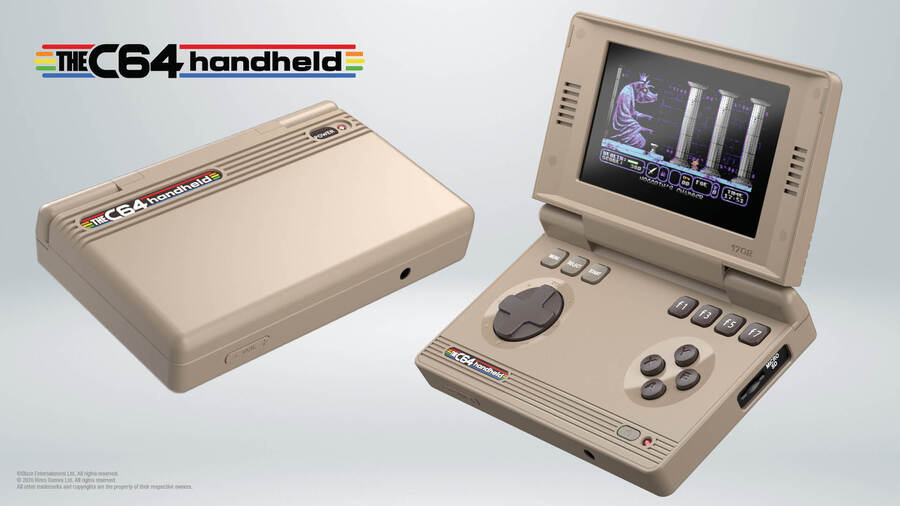
Blaze Entertainment and Retro Games Ltd. have also pushed classic home computer nostalgia further into the handheld space with portable versions of The C64 and The Spectrum, both expected in October 2026.
Each device includes a built-in game library, a 4.3-inch display, remappable controls, stereo speakers, USB-C charging, headphone support, microSD expansion, and USB support for keyboards and joysticks. That last point is important because C64 and Spectrum nostalgia is not exactly the same as console nostalgia.
Classic home computers were not just game machines. They were keyboards, BASIC prompts, cassette loaders, bedroom programming environments, and cultural gateways into computing. A handheld C64 or Spectrum therefore has a slightly different job from a handheld console. It has to evoke a machine that was both a games platform and a computer.
These devices are interesting because they are not trying to compete with generic emulation handhelds on value. Cheaper devices can already emulate C64 and Spectrum software. The appeal is cultural: the case design, the branding, the built-in library, and the ability to recreate a small desktop-style setup with keyboard and joystick.
That is a key theme of 2026. Retro hardware is increasingly selling identity as much as capability. Players are not just buying access to software. They are buying a feeling, a format, and a connection to a particular era of gaming history.
FPGA Hardware Is Moving From Hobbyist Niche To Product Category
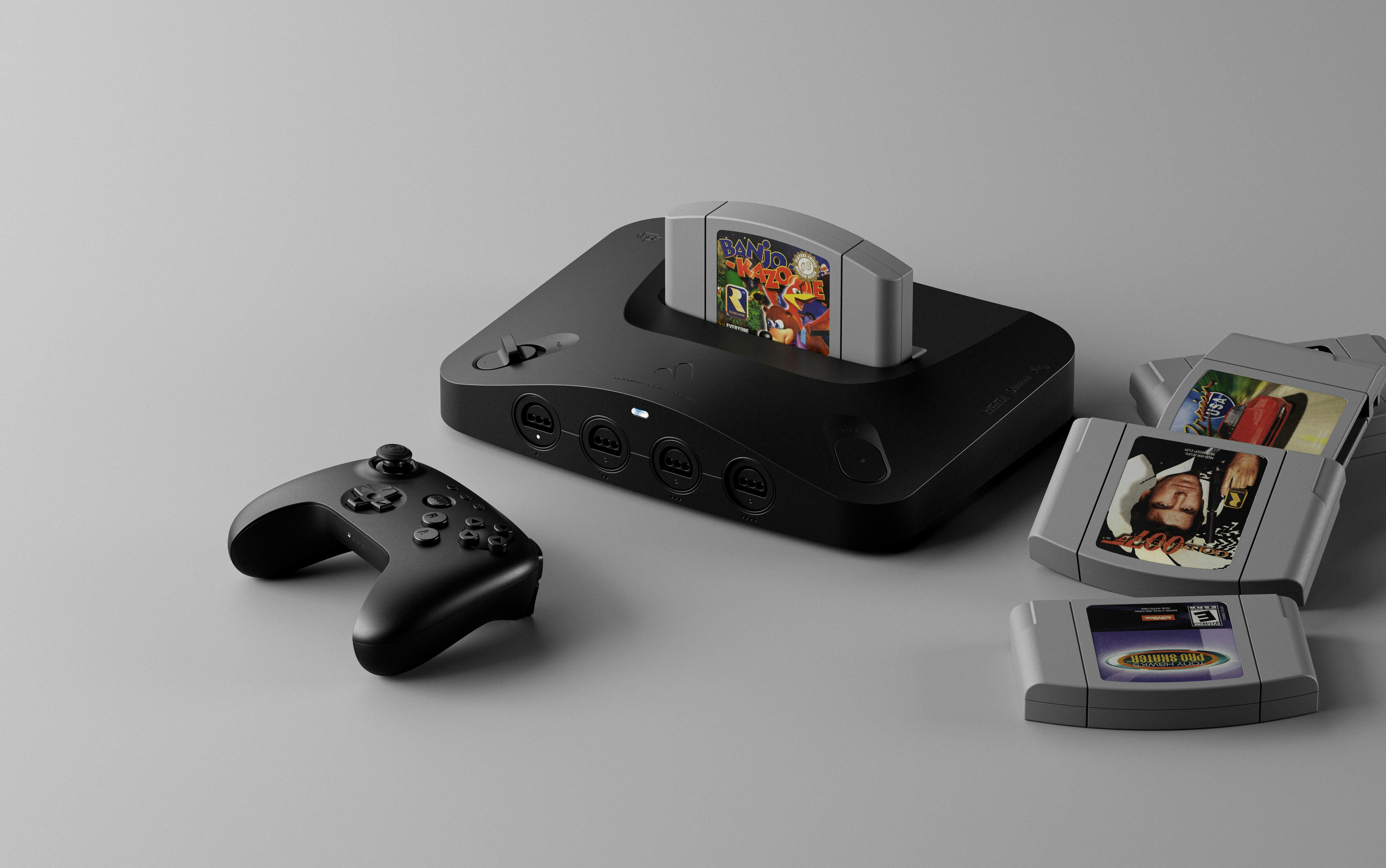
One of the clearest signs that retro gaming has matured is the rise of FPGA hardware as a commercial product category. FPGA stands for field-programmable gate array. In simple terms, it allows hardware to be configured to behave like another piece of hardware. In retro gaming, that means recreating classic console behaviour at a hardware-logic level rather than running a traditional software emulator on a general-purpose processor.
The Analogue 3D has become one of the year’s most visible FPGA stories. It is designed as a modern, high-fidelity Nintendo 64-style system built around original cartridges and modern display output. Its firmware updates have also added modern convenience features such as save states, meaning cartridge-based N64 games can be played with features the original hardware never allowed.
That blend is central to FPGA’s appeal. It offers the romance of original cartridges with the convenience of modern displays, save features, and cleaner output. For collectors, it provides a way to keep using physical media without relying on ageing original consoles. For enthusiasts, it promises low-latency, highly accurate play.
The more mature view is that accuracy, latency, maintainability, and legal game access matter more than slogans. FPGA hardware may emulate classic systems differently from software emulators, but it is still part of the broader emulation and preservation conversation.
This matters because buyers are becoming more informed. In 2026, retro gaming fans increasingly understand that “plays old games” is not enough. They want to know how accurately a system behaves, how much input lag it has, whether it supports original media, whether the firmware is maintained, and whether the project contributes anything back to the preservation community.
MiSTer And Arcade Preservation Keep Advancing
The open FPGA scene continues to matter because it is where much of the deepest preservation work happens. The MiSTer FPGA ecosystem has seen ongoing work around arcade cores, console cores, performance improvements, and community-driven support for systems that are difficult to preserve accurately through more casual plug-and-play products.
MiSTer is not as simple or mainstream as a boxed retail handheld. That is part of the point. It is closer to a preservation platform than a consumer nostalgia toy. Enthusiasts use it to recreate classic consoles, computers, and arcade boards with a high level of accuracy, often supported by years of community development.
One of the most exciting areas is arcade preservation. Progress around platforms such as Capcom’s CPS3 is especially significant because it covers a small but legendary library, including Red Earth, Street Fighter III, Street Fighter III: 2nd Impact, Street Fighter III: 3rd Strike, and the JoJo’s Bizarre Adventure arcade titles.
CPS3 matters because those games are not just technically interesting; they are culturally important. Street Fighter III: 3rd Strike remains one of the most respected fighting games ever made, and accurate preservation of arcade hardware is crucial for keeping games like that alive in their original form.
Getting platforms like CPS3 running accurately on FPGA would be a major milestone for arcade preservation, not just another box ticked on a compatibility list. It would also help show why open FPGA projects matter alongside commercial retro products. Retail devices can make retro gaming accessible, but community preservation projects often push deeper into the technical history of the medium.
Nintendo’s Official Retro Strategy Became Stranger And Broader
Nintendo’s own retro offering expanded in two directions this year: prestige and oddity.
On the prestige side, GameCube titles have become part of Nintendo’s modern classics strategy for Switch 2 users through Nintendo Switch Online + Expansion Pack. That gives Nintendo a direct way to commercialise one of its most beloved back catalogue libraries without selling individual downloads.
GameCube is a particularly important generation for Nintendo nostalgia. It sits in a sweet spot between childhood memory and modern playability. Its games are old enough to feel retro, but modern enough that many still look and play comfortably on current displays. Bringing GameCube titles into an official subscription library makes sense commercially, but it also changes the way players access that era.
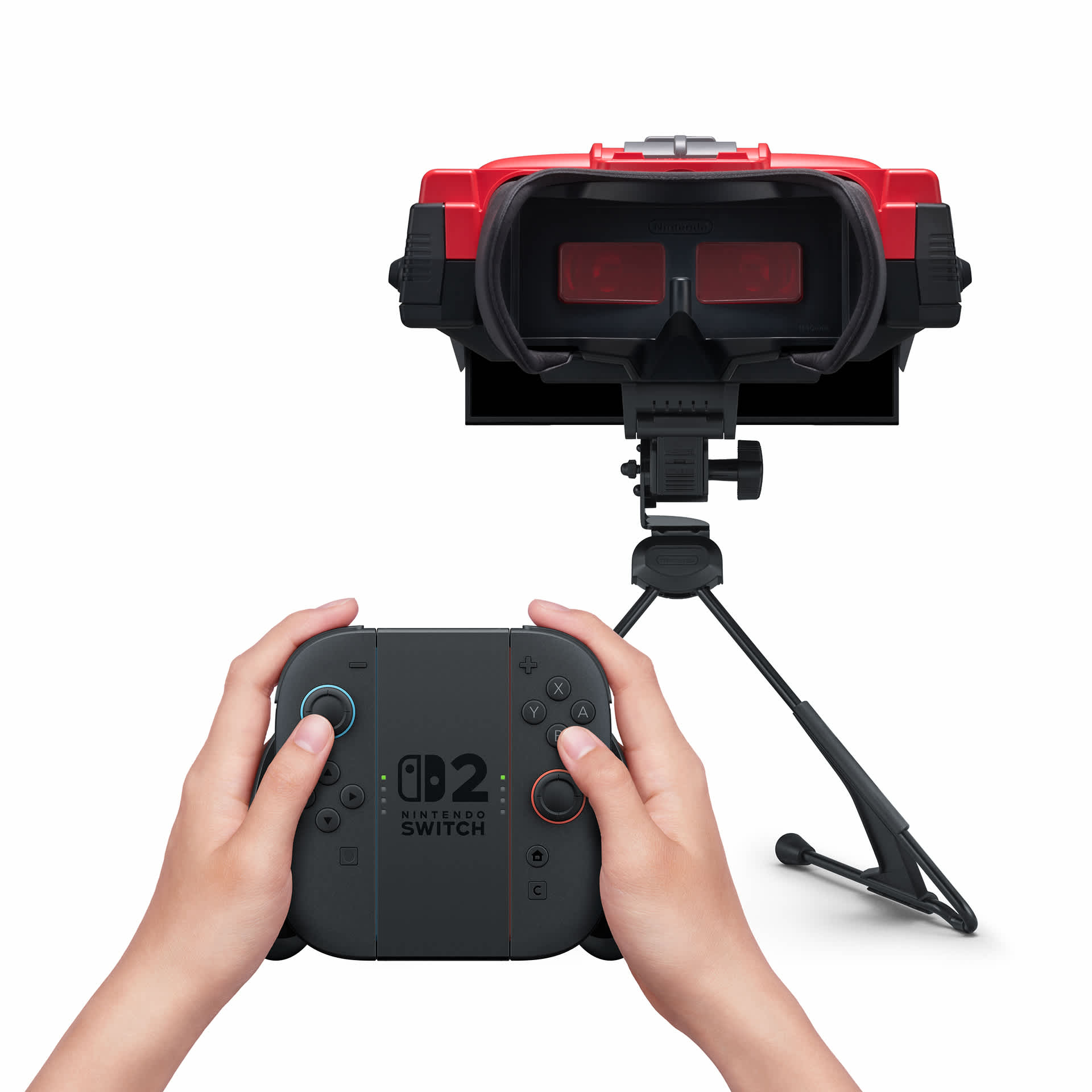
On the oddity side, Nintendo revived the Virtual Boy through a dedicated accessory for Switch and Switch 2. This is one of the most fascinating retro moves of the year. GameCube support is an obvious value play. Virtual Boy support is closer to historical curation: a commercial attempt to make one of Nintendo’s strangest failures available in a semi-authentic modern form.
The Virtual Boy was never a mainstream success, but that is exactly why its return is interesting. It suggests that official retro gaming is expanding beyond the obvious hits. Companies are no longer just re-releasing the safest classics. They are starting to package the weird parts of gaming history too.
That shift matters. If retro gaming is only about the most popular games, then huge parts of gaming culture disappear. The failed experiments, strange peripherals, niche systems, and commercial misfires are often where the most interesting design history lives.
Emulator Breakthroughs Are Changing What Retro Can Feel Like

On the software side, one of 2026’s biggest technical moments came from Dolphin, the GameCube and Wii emulator. Dolphin’s recent work has included support for Sega/Namco/Nintendo Triforce arcade software as well as major improvements to difficult GameCube and Wii titles that rely on complex memory management behaviour.
This is the kind of breakthrough that casual players may not immediately notice, but preservationists do. Triforce arcade games have historically been awkward to document, emulate, and preserve because of specialised hardware features, card systems, and unusual arcade configurations.
Adding support for a difficult arcade platform is not simply a compatibility win. It is an act of preservation. Arcade hardware can be particularly fragile from a historical perspective because cabinets, boards, security systems, card readers, and location-specific setups are harder to preserve than home consoles. If those platforms are not documented and emulated, parts of gaming history become difficult to access or study.
Dolphin’s continued progress also shows how mature emulation has become. The conversation is no longer just about whether an emulator can boot a game. It is about timing, memory behaviour, edge cases, arcade variants, controller accuracy, online play, shader compilation, accessibility, and long-term maintainability.
Nintendo 64 emulation has also moved forward with rollback netcode work in emulator forks. Rollback is especially important for games like Super Smash Bros. and GoldenEye 007, where traditional delay-based netplay can make timing feel sluggish. In 2026, retro multiplayer is not just being preserved; it is being modernised.
This is one of the most exciting software trends of the year. Online play was not part of most retro console experiences, but modern players increasingly expect it. The challenge is adding those features without destroying the feel of the original games. Rollback netcode, when done well, can make old multiplayer games feel surprisingly alive again.
Native PC Ports Are Becoming The Next Preservation Frontier
Another 2026 trend is the movement from “emulating the console” to “rebuilding the game.” Unofficial native PC ports and recompilation projects are becoming more visible, especially around Nintendo 64-era titles.
This does not replace emulation. Instead, it creates a second path. Emulation aims to reproduce the machine. Native ports aim to translate the game into a modern software environment while requiring users to provide their own legally obtained assets.
That distinction is important. A traditional emulator tries to behave like the original console, so the game runs as it did before. A native port or recompilation project tries to make the game itself run on modern hardware more directly. The result can allow for widescreen support, higher resolutions, modern controllers, improved frame rates, mod support, and easier long-term compatibility.
This trend has already changed how people think about certain classic PC and console titles. Rather than simply accepting the limitations of the original hardware, players increasingly expect classic games to be preserved in a way that allows thoughtful modern enhancements.
There is a legal and ethical line here. Projects generally need to avoid distributing copyrighted game assets and often require users to provide their own legally obtained files. That can make native ports less straightforward than simple emulation, but it also makes them one of the most interesting preservation paths for the future.
As more 1990s and early-2000s games receive decompilation or recompilation attention, the retro scene may split again: some players will want original accuracy, while others will want modernised native versions. Both approaches have value. One preserves the machine. The other preserves the game as something that can keep living on new platforms.
Preservation Tools Are Getting More Practical
A less flashy but important development is the rise of more practical disc preservation tools. New firmware and software workflows have made it easier for collectors to read and back up certain proprietary game disc formats using compatible PC optical drives.
This matters because legal emulation often depends on users being able to dump their own games, but many disc-based consoles were deliberately difficult to read with standard PC drives. A practical PC-based ripping route gives collectors another way to preserve ageing physical libraries before original consoles and disc drives fail.
Disc-based systems are entering a vulnerable period. Optical drives wear out. Discs suffer from scratches, disc rot, and storage damage. Replacement hardware is becoming more expensive. For collectors, the ability to create reliable personal backups is not just convenient; it can be essential for keeping a library playable.
The legal details still vary by jurisdiction and by whether encryption is bypassed, but the preservation value is clear. Retro gaming is no longer only about buying another mini console. It is also about making sure the games people already own remain accessible in the future.
This is where the infrastructure idea becomes most obvious. Retro gaming now includes hardware, software, controllers, displays, firmware, dumping tools, metadata, patches, save management, online services, and community documentation. Playing the past increasingly depends on a chain of systems working together.
The Big Picture
Retro gaming in 2026 is splitting into several overlapping worlds.
There is the licensed nostalgia world, represented by Evercade, Atari, C64, Spectrum, and Nintendo’s subscription libraries. These products are built for players who want retro gaming to feel official, accessible, and collectable. They are not always the most flexible options, but they make old games easier to understand, buy, display, and enjoy.
There is the accuracy and preservation world, represented by FPGA projects, MiSTer development, Analogue-style hardware, and open-source console cores. This side of the scene is more technical, but it is essential. It asks harder questions about what it means to preserve a system accurately, how much latency matters, and whether modern hardware can recreate old machines faithfully.
There is the software breakthrough world, where Dolphin, N64 rollback netcode, recompilation, and native PC ports are making old games behave in ways original hardware never could. This world is less concerned with packaging nostalgia and more concerned with expanding what old games can do in a modern context.
And there is the collector-practicality world, where dumping tools and preservation workflows help people protect physical libraries they already own. This may be the least glamorous part of retro gaming, but it is one of the most important. Without practical preservation, physical collections become increasingly fragile.
The major breakthrough of 2026 so far is not one device. It is that retro gaming has become infrastructure: hardware, software, legal access, physical media, online play, save states, display options, input fidelity, and archival workflows are all evolving at once.
The scene is no longer just about playing the past. It is about deciding what parts of the past should be preserved exactly, what parts should be modernised, and who gets to control that process.
That makes 2026 one of the most interesting years retro gaming has had in a long time. The products are getting slicker, the preservation work is getting deeper, the legal questions are getting sharper, and the audience is getting broader. Nostalgia is still the hook, but infrastructure is now the story.