

The first half of August 2026 produced one of the clearest examples yet of retro gaming functioning as active history rather than a collection of old software left untouched. Games that were cancelled before release have become officially playable, unfinished development material has been incorporated into a modern version of Quake, and programmers have returned to decades-old Amiga and Nintendo 64 code to build new ways of experiencing games whose original hardware is long out of production.
Nintendo delivered perhaps the most unusual release of the fortnight when ZERO RACERS and D-HOPPER, two Virtual Boy games that never reached customers during the system's commercial life, were added to Nintendo Classics. Their arrival means software abandoned around 1996 has effectively received its commercial debut thirty years later, turning Nintendo's subscription service into something more interesting than a catalogue of games that had already been sold before.
Elsewhere, the thirtieth anniversary of Quake brought a substantial new MachineGames campaign alongside playable unfinished development maps, while original Worms creator Andy Davidson returned to the Amiga-exclusive Worms: The Director's Cut with a free expansion assembled with contributions from the wider Amiga community. Both projects extend existing games, but they also expose something of how those games were made and why their original platforms still matter.
Community development supplied a different kind of preservation. Metroid Prime Origins rebuilt the GameCube game as an elaborate 2D fan project, while decompilation work around Nintendo's Nintendo 64 Zelda games has now allowed both Ocarina of Time and Majora's Mask to run natively on iPhones and iPads rather than through a conventional N64 emulator. Ocarina of Time reached iOS in late July, while Majora's Mask followed on 3 August, making the latter the new development within this article's research period.
Physical history was equally visible. A cache of 97 pristine Super Mario Bros./Duck Hunt cartridges has revealed a previously undocumented manufacturing variant, a new edition of ZZAP! is being packed with the first UK production run of THEA1200, and Commodore has announced a newly manufactured TAC-2 joystick intended to work with both modern recreations and original machines.
Even preservation as a public activity had a strong fortnight. Kingston University's Archive of Retro Computing opened more than 60 historical machines for visitors to use, while Nintendo added Super Mario Sunshine to the GameCube Nintendo Classics catalogue. Taken together, the stories show that keeping game history alive now involves software, hardware, printed material, reverse engineering, archives, subscriptions, community knowledge and, importantly, the ability to continue playing.
Research period: 1–14 August 2026.
Release dates and event dates were checked separately from publication dates. Official releases, fan projects, future products and developing stories are identified clearly, and unconfirmed explanations are kept separate from established facts.
The Last 14 Days At A Glance
| Date | Development | Status | Why It Matters |
|---|---|---|---|
| 3 August | Majora's Mask is demonstrated running natively on iOS and iPadOS, following Ocarina of Time in late July. | Community port | Shows how N64 decompilation projects are creating native versions rather than relying entirely on emulation. |
| 4 August | ZERO RACERS and D-HOPPER join Virtual Boy Nintendo Classics. | Official release | Two cancelled Nintendo games become officially playable around thirty years after their intended release. |
| 5–11 August | Kingston University's Archive of Retro Computing opens its annual public exhibition. | Public archive | More than 60 historical computers and consoles are made available for visitors to use rather than simply view. |
| 6 August | MachineGames adds Dawn of the Machine and development material to Quake. | Official update | The 30-year-old game gains 19 new levels alongside playable unfinished maps from its original development. |
| 6 August | Metroid Prime Origins launches for Windows. | Fan project | A three-year community project reconstructs the GameCube adventure as a complete 2D game. |
| 7–8 August | Worms: The Director's Cut receives a free expansion from original creator Andy Davidson. | Team17-approved project | New levels, voice packs and landscapes extend an Amiga game released in 1997. |
| 10 August | The UK launch edition of THEA1200 is confirmed to include a new 36-page ZZAP! magazine. | Commercial hardware | The package acknowledges magazines and documentation as part of the historical computer experience. |
| 11 August | Commodore announces a new production version of the TAC-2 joystick. | New hardware | An influential 1980s controller is being manufactured again with original-style DE-9 connectivity. |
| 11–14 August | The story of 97 pristine Super Mario Bros./Duck Hunt cartridges moves into authentication and auction. | Historical discovery | The cartridges document a previously unrecorded late manufacturing variant of one of the NES's most common games. |
| 13 August | Super Mario Sunshine joins Nintendo GameCube – Nintendo Classics. | Official release | The original GameCube version becomes commercially accessible again through Nintendo's current subscription service. |
Nintendo Releases Two Virtual Boy Games That Never Reached Shops
Nintendo's addition of ZERO RACERS and D-HOPPER to Virtual Boy – Nintendo Classics on 4 August is unusual even by the standards of modern retro releases. These are not games being resold after disappearing from the market for several decades; neither title received a conventional commercial release during the Virtual Boy's original lifetime, despite development progressing far enough for both to be demonstrated during the 1990s.


ZERO RACERS is particularly interesting because it belongs to the F-Zero family. Players race floating machines through courses constructed from connected square ducts, completing five laps while meeting position requirements and collecting temporary Rapid boosts. The Virtual Boy's stereoscopic display gives the enclosed courses genuine depth, making the concept more closely connected to the machine's unusual hardware than a straightforward 2D conversion would have been.
The game had previously been known under names including G-Zero and had been shown during the Virtual Boy era before disappearing alongside the failing platform. A former Nintendo employee had previously described the game as effectively complete, but until 2026 the public had no normal way to assess that claim through an authorised release.
D-HOPPER Brings Back Another Abandoned 1996 Project
The second game, D-HOPPER, was developed by Intelligent Systems and had previously been known as Dragon Hopper. It follows Prince Dorin as he moves between floating platforms, fights enemies and searches for four missing spirits, eventually gaining the ability to transform into a dragon with additional powers.
The game uses the Virtual Boy's depth for stacked environments and movement between planes, again demonstrating why simply describing the machine as a red monochrome console misses part of what its developers were attempting to achieve. The commercial failure of the original hardware meant that ideas designed around its stereoscopic screen had very little opportunity to mature before software production ended.
Their release in 2026 therefore changes the historical record slightly. Screenshots, prototype accounts and trade-show memories can tell us that cancelled games existed, but a functioning release allows the level design, controls, difficulty and technical decisions to be examined directly. Nintendo has effectively converted two pieces of unfinished commercial history into accessible software.
Access Still Depends On Modern Nintendo Hardware
There is an important limitation. The Virtual Boy library sits inside Nintendo Switch Online + Expansion Pack, and Nintendo's implementation requires compatible Virtual Boy viewing hardware rather than simply presenting the games as conventional flat-screen releases. Players therefore need the subscription, a compatible Switch system and the appropriate viewing accessory.
That makes the restoration more controlled than a normal digital purchase. The games are available, but access remains tied to Nintendo's current service and hardware ecosystem. From a preservation perspective, this is still an enormous improvement over software remaining permanently unreleased, although it is different from placing independent archival copies into permanent public collections.
The same August update also introduced the ability to alter the display colour rather than remaining restricted to the Virtual Boy's original red presentation. That modern option is useful for comfort and accessibility, while the original red remains important for anyone interested in how the games were actually designed to appear.
Why this matters:
Official retro services normally redistribute known releases. ZERO RACERS and D-HOPPER demonstrate that they can also recover commercially abandoned software and turn material once accessible only through prototypes, screenshots and development accounts into something the public can actually play.
Read More About The Virtual Boy Releases
Quake At 30: A New Campaign Becomes A Playable Archive
Quake turned thirty in 2026, and the anniversary produced something considerably more useful than another commemorative menu screen. On 6 August, MachineGames added Dawn of the Machine to the modern release of id Software's 1996 shooter, providing 19 new levels alongside additional weapons and a gallery containing archival material from the game's development.
MachineGames has a particularly appropriate relationship with Quake. The studio has previously produced Dimension of the Past and Dimension of the Machine, creating new content that uses the original game's design language while benefiting from decades of accumulated knowledge about its movement, combat and level construction. Dawn of the Machine extends that work rather than trying to redesign Quake into a modern shooter.


The campaign introduces weapon variants including a Super Axe capable of generating lightning through successive strikes and a Laser Cannon whose projectiles can ricochet through environments. Those additions change the available combat vocabulary without replacing the fundamental movement and enemy encounters that make the original game recognisable.
The More Interesting Addition May Be The Unfinished Levels
The archival gallery goes beyond concept art and production photographs by including incomplete levels created during Quake's original development. These maps can be entered and explored even though they contain dead ends, rough layouts and areas that were never intended to appear in the finished game.
That is a meaningful form of preservation because development history is normally flattened when a game ships. The final version shows which ideas survived, but it does not necessarily show the discarded routes, abandoned geometry or intermediate decisions that led to them. Unfinished map files allow players and researchers to inspect that process rather than relying entirely on retrospective descriptions.
Rough naming conventions and incomplete passages are part of the value rather than defects that need to be hidden. They show working material as working material. Presenting them separately from the finished campaign also avoids pretending that these were secret completed levels unfairly withheld from the original release.
QuakeCon Put The History Back In The Room
The update arrived alongside QuakeCon, whose main 2026 event ran from 6 to 9 August at the Gaylord Texan Resort & Convention Center in Grapevine, Texas. Badge collection, equipment tagging and limited Stay & Play activity were available on Wednesday 5 August, but the main BYOC event officially opened on Thursday 6 August.
The schedule included dedicated programming around thirty years of Quake. John Romero appeared in a 30 Years of Quake session with special guests, while the wider event included classic Quake competition, community activities and programming connected with id Software's history.
That combination of new levels, early development material and direct testimony from people involved with id makes the anniversary more useful than a simple celebration of sales or brand recognition. The game can be played as it was, extended with new content and studied through material that reveals how it took shape.
It also shows the advantage of maintaining a strong modern release of old software. Once the enhanced version exists on contemporary systems, publishers can add historical material without requiring players to build a separate museum application or locate ageing PC hardware.
The most important part of the update may not be the new campaign.
Making unfinished 1990s development levels playable turns an anniversary release into a small interactive archive. Players can inspect work that would normally survive only as screenshots, files in private collections or descriptions in interviews.
Read More About Dawn Of The Machine
View The QuakeCon 30 Years Of Quake Schedule
Worms: The Director's Cut Gets New Amiga Content
While Quake received new content through a modern commercial release, the Amiga produced a more unusual example of an original creator returning directly to old code. Andy Davidson has released a free expansion for Worms: The Director's Cut, the Amiga-exclusive version of Worms that appeared in 1997 as the platform's market was rapidly contracting.

The project has been described as unofficial but approved by Team17, an important distinction because Davidson created the original game but the expansion is not simply a new boxed Team17 product appearing through conventional retail. It is a community-driven addition built around his surviving knowledge of the software, contributions from the Amiga scene and an explicit desire to give The Director's Cut another period of active use.
The expansion contains more than 40 custom levels, over 50 new voice sample packs, additional teams and new terrain types. Contributions draw from the wider Amiga community, and one of the included levels pays tribute to Jeff Minter and Llamasoft.
The Director's Cut Was Already An Unusual Version Of Worms
Worms: The Director's Cut was designed specifically for AGA Amigas such as the Amiga 1200 and 4000. Davidson has previously described it as both a thank-you to the Amiga community and a testing ground for ideas that would influence later Worms games, giving him more freedom to experiment with weapons and mechanics than might have been possible in a more commercially constrained release.
Returning to that version three decades later therefore has more significance than adding random maps to an old game. Davidson is extending the branch of Worms that remained most closely connected with the platform on which the series began, while also incorporating material from people who continued using and creating for the Amiga long after mainstream development moved elsewhere.
He has also been open about the difficulty of working with his own old source code. Decades of distance can make software unfamiliar even to the person who originally wrote it, particularly when development tools, hardware assumptions and coding practices have changed. The project is therefore an example of why source preservation matters: having code survive is valuable, but understanding the environment and reasoning around that code is another challenge entirely.
Original Hardware Is Not Required
Davidson has said the new material works with Amiga emulators, allowing players without functioning AGA hardware to experience it. That broadens access substantially because surviving Amiga 1200 systems are now valuable pieces of ageing hardware whose capacitors, floppy drives, power supplies and storage devices may all require maintenance.
Emulation does not remove the value of running the expansion on an original machine. It simply gives the project a larger audience and makes it easier to preserve the files beyond the lifespan of any individual Amiga.
Work is also taking place around a website for community-created content. If maintained properly, that could make the expansion the starting point for further activity rather than a one-off anniversary download.
Current status:
The expansion is free and publicly available. It is best described as a Team17-approved project from original Worms creator Andy Davidson rather than a conventional new commercial Team17 release.
Read More About Worms: The Director's Cut 1.5
Metroid Prime Origins Shows The Power & Fragility Of Fan Games
Nintendo itself had relatively little to say publicly about Metroid's fortieth anniversary on 6 August, but a fan development team used the date to release something far more ambitious than a commemorative video. Lv.4 Games launched Metroid Prime Origins, a complete 2D reinterpretation of the original GameCube Metroid Prime built secretly over approximately three years.
Calling it a demake understates some of the work involved. The project takes a game originally designed around three-dimensional first-person exploration and translates its environments, traversal, combat and scanning system into side-on 2D play. Its visual style deliberately resembles an earlier generation without attempting to obey the strict colour, memory and sprite limitations of an NES.
The developers created new fan artwork and music rather than simply copying every visible asset from the GameCube release, while the lore was rewritten using the original NTSC material as its basis. The team also states that generative AI was not used to produce the sprites or music.
Rebuilding A 3D Game In 2D Requires Interpretation
Metroid Prime was itself a reinterpretation of the established 2D Metroid structure, taking interconnected rooms, upgrades and environmental puzzles into a first-person 3D world. Prime Origins effectively performs that translation in reverse, but it cannot simply flatten each room and expect the original design to survive intact.
Camera perspective determines what the player can see, how enemies approach, where platforms can be placed and how navigation is communicated. Grappling, aiming and the scan visor all need interfaces appropriate to 2D movement. The result is consequently better understood as an adaptation than as a miniature copy.
The available build includes modern options such as autosaving, hints, controller vibration settings, damage adjustments and mouse aiming. These features push the project further away from pretending to be a literal lost NES game and towards being a contemporary fan interpretation of an older design.
The Availability Story Requires Careful Reporting
Within hours of release, the project's YouTube trailer disappeared and an Archive.org download also became unavailable, leading naturally to speculation that Nintendo had intervened. The evidence available at the time of research does not establish that.
Lv.4 Games stated that it had not received a Nintendo takedown notice, while the removed YouTube page referred to a violation of YouTube's own Terms of Service. Other download routes remained available after the initial removals. It would therefore be inaccurate to report that Nintendo definitely issued a copyright takedown unless further evidence emerges.
The uncertainty still demonstrates the difficult position occupied by large fan games. Years of unpaid development can produce technically sophisticated work, but the team does not control the underlying characters, world or commercial game on which the project is based. A public release can consequently be far less durable than an ordinary open-source tool or independently owned homebrew game.
Important distinction:
Some hosting links disappeared soon after release, but there was no confirmed Nintendo takedown notice in the evidence available during this research period. The project should not be described as having been shut down by Nintendo unless that changes.
Read More About Metroid Prime Origins
Majora's Mask Joins Ocarina Of Time As A Native iPhone & iPad Port
Another community project this fortnight illustrates a different route away from ageing hardware. Chris Sotraidis brought Ocarina of Time to iOS and iPadOS in late July, using Ship of Harkinian as the foundation for a native Apple-platform build. On 3 August he followed it with Majora's Mask, using Harbour Masters' related 2 Ship 2 Harkinian project.
That timing matters because only the Majora's Mask development falls inside this article's 1–14 August research period. Ocarina of Time remains relevant as the immediately preceding project that established the technical approach, but it should not be presented as a new August release.
The distinction between a native port and an emulator also matters. An N64 emulator reproduces enough of the original console's hardware environment for the compiled game software to run largely as though it were still communicating with a Nintendo 64. A native port instead uses reconstructed source code and builds an executable intended directly for the modern operating system and graphics environment.
Sotraidis' work therefore sits on top of years of community reverse engineering. Ship of Harkinian provides the reconstructed foundation for Ocarina of Time, while Majora's Mask uses 2 Ship 2 Harkinian. Both projects exist because the behaviour of the original N64 software has been converted into source that can be compiled and extended on new platforms.
Native Ports Can Do Things The Original N64 Could Not
Moving the game into a native environment makes features such as modern resolutions, widescreen output, alternative graphics backends and controller configuration easier to integrate than they would be when treating the original cartridge software as an unmodified black box.
On iOS, controller support is particularly relevant. Majora's Mask was designed around the N64 controller's analogue stick, Z trigger and four C buttons, none of which maps naturally onto a featureless touchscreen. The port supports Bluetooth controllers while also providing touch, keyboard and mouse options.
This flexibility illustrates why decompilation has become one of the most important community developments around certain older games. Once the engine is understood well enough to compile on new architectures, preservation is no longer limited to imitating the old machine. The software can be adapted as operating systems and processors change.
The Projects Do Not Include Nintendo's Game Assets
Ship of Harkinian and 2 Ship 2 Harkinian explicitly state that they do not distribute Nintendo-owned game assets. Users are required to supply supported data from a legally obtained copy of the relevant game, from which the required assets are extracted.
This separation is central to the projects' approach. The community-developed code can be distributed and improved without bundling the copyrighted graphics, audio and other commercial material required to reconstruct the finished game.
It also means that describing these projects as free copies of Ocarina of Time or Majora's Mask would be misleading. They provide a new engine and platform implementation; the user still needs the underlying game data.
These are native ports, not N64 emulators.
Ocarina of Time reached iOS in late July and Majora's Mask followed on 3 August. Ship of Harkinian and 2 Ship 2 Harkinian do not distribute Nintendo's copyrighted game assets and require users to supply supported copies themselves.
Read More About The Native iOS Ports
Read The Ship Of Harkinian FAQ
THEA1200 Puts A New ZZAP! Magazine In The Box
Retro Games Ltd's full-size THEA1200 is not due to launch until 4 December 2026, but its UK launch package gained an unusually appropriate addition on 10 August. The first UK production run will include a special 36-page, full-colour A5 edition of ZZAP! produced by Fusion Retro Books.
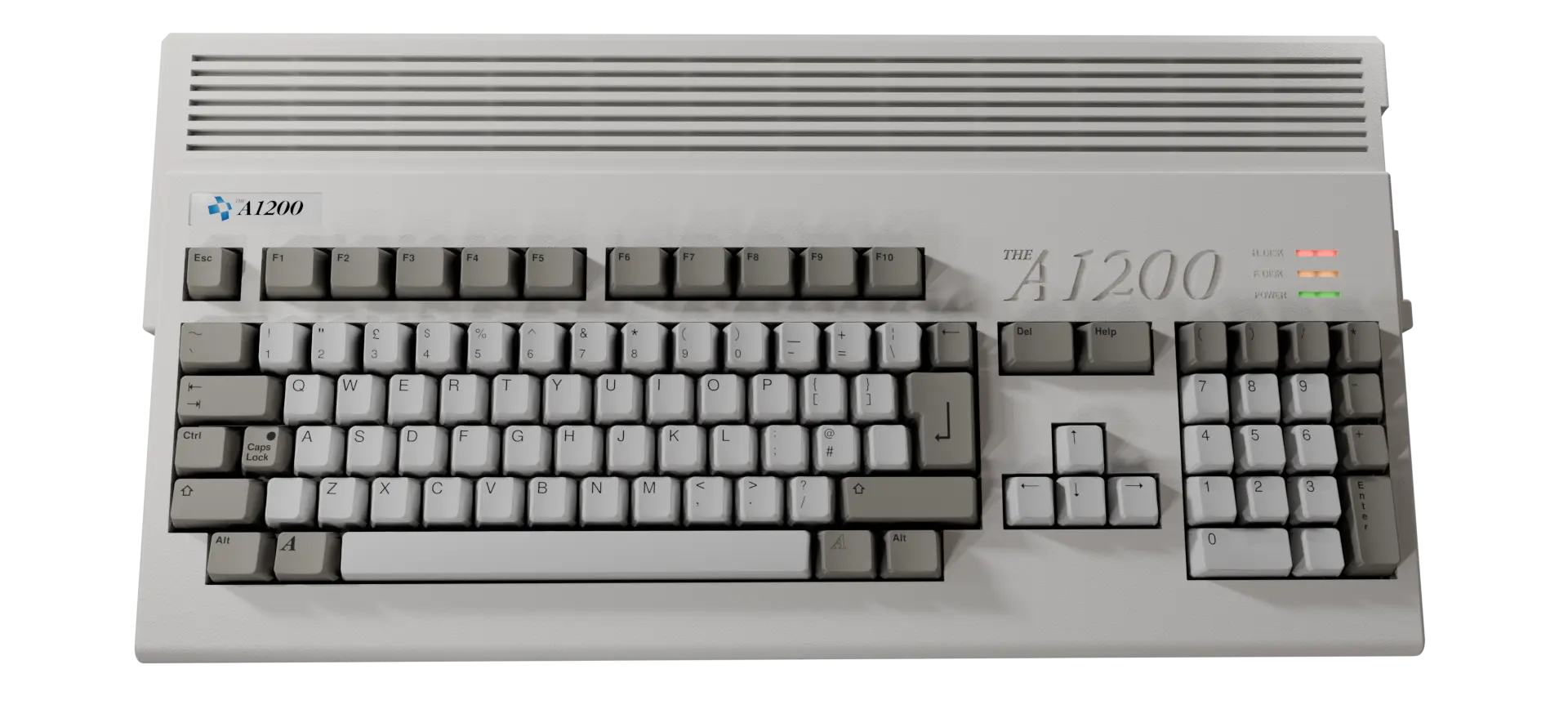
The issue contains newly produced material rather than simply shrinking scans from an old magazine. Reported contents include reviews, features and an Alien Breed comic, linking the new hardware with the kind of printed material through which Amiga owners originally discovered software, read technical information and followed the wider computer scene.
Only the first UK production run will include the magazine. Later manufacturing runs are not expected to contain it, making this a launch-edition inclusion rather than a permanent part of every THEA1200 package.
Why A Magazine Belongs In A Hardware Story
Game preservation discussions understandably concentrate on ROMs, disks and hardware, but magazines form another layer of the historical record. Reviews reveal how games were received at release, advertisements preserve pricing and marketing claims, technical columns record problems users encountered, and letters pages show what communities actually discussed before forums and social media existed.
British home computing was particularly dependent on that relationship between software and print. Spectrum, Commodore, Amstrad and Amiga owners could encounter several competing magazines every month, each effectively curating an enormous and rapidly changing software market.
Packing a newly produced ZZAP! issue with THEA1200 cannot recreate that newsstand ecosystem, but it acknowledges that a home computer was never experienced through hardware alone. Manuals, magazines, cover disks, type-in listings and printed advertisements all influenced what owners did with the machine.
THEA1200 Is More Than A Fixed Games Console
Retro Games Ltd describes THEA1200 as a full-size recreation with a functional keyboard rather than a miniature shell built only around a carousel of games. The machine includes 25 built-in titles, HDMI output, an Amiga Workbench installation and USB support for user-supplied software through WHDLoad.
The working keyboard and Workbench environment matter because the Amiga was a general-purpose computer. It was used for graphics, music, programming, demos, productivity and experimentation as well as games. A recreation that ignored the keyboard and desktop would preserve only one part of what the A1200 represented.
THEA1200 remains an emulation-based recreation rather than original Commodore hardware or an FPGA implementation. That distinction will matter to enthusiasts comparing timing, compatibility and expansion behaviour, but it does not prevent the machine from providing a practical modern route into the Amiga software library.
UK launch edition only:
The 36-page ZZAP! issue is planned for the first UK production run. Retro Games Ltd lists THEA1200 for launch on Friday 4 December 2026 with a working keyboard, Workbench, 25 built-in games and support for user-owned software through USB.
View The Official THEA1200 Product Page
The TAC-2 Joystick Is Going Back Into Production
The current Commodore organisation is extending its hardware revival beyond computers by putting the TAC-2 joystick back into production. The Suncom TAC-2 became one of the more highly regarded digital joysticks of the 1980s and was widely used with Atari-compatible systems and home computers including the Commodore 64 and Amiga.


The new model preserves the compact ball-top layout and DE-9 connection that make the original useful with period hardware, but it is not a component-for-component reproduction. Commodore says the original US-made controller used a TR418 tyre-valve stem in its shaft assembly together with an attached brass ball. The revived TAC-2 replaces that arrangement with a single-piece, solid-steel, chrome-plated shaft assembly intended to eliminate a rare structural weakness while retaining the basic feel and layout of the original controller.
This creates an interesting middle ground between restoration and recreation. An original TAC-2 can still be cleaned and repaired, but its contacts, cable, rubber components and plastics have already endured roughly four decades of use and storage. A newly manufactured controller can retain the physical control style without requiring owners to consume increasingly scarce original examples simply to play.
Original Connections Still Matter
Retaining DE-9 rather than converting the controller exclusively to USB is arguably the most important decision. A USB-only recreation would work conveniently with modern computers and FPGA systems but would require adapters before it could be used with many of the machines that made the TAC-2 popular.
The classic digital joystick connection allows compatibility across a wide family of 8-bit and 16-bit systems, although users should still check the electrical requirements of individual machines rather than assuming that every physically similar nine-pin port is wired identically.
Commodore announced several colour versions, with standard models beginning at $49.99. The company currently lists shipping to begin on 20 October 2026. An early checkout issue also overcharged the first 83 customers for delivery; Commodore subsequently issued refunds and clarified a standard worldwide shipping charge of $19, while saying it would absorb additional US tariff costs rather than passing them on separately.
Controllers Are Part Of Software Accuracy
Recreating a computer accurately while replacing its input device with a modern analogue gamepad can alter how its games feel. Digital joysticks have no analogue travel between directions, and the throw, centring resistance, fire-button position and ability to move quickly between opposite inputs all influence games designed around them.
New production of historically appropriate controllers can therefore be as useful as manufacturing replacement computers. It also reduces pressure on surviving peripherals that may be better retained as historical objects than subjected to another decade of vigorous use.
Current status: announced for new production.
The revived TAC-2 retains the classic DE-9 connection but replaces the original TR418 tyre-valve and brass-ball shaft arrangement with a newly engineered solid-steel, chrome-plated assembly. Shipping is currently scheduled to begin on 20 October 2026.
97 Common Mario Cartridges Become A Historical Discovery
One of the most interesting Nintendo stories of the fortnight concerns a game that is usually the opposite of rare. Super Mario Bros./Duck Hunt was produced in enormous numbers as an NES pack-in, yet a cache of 97 apparently unused cartridges has revealed a manufacturing variant that collectors and researchers had not previously documented.
Collector and Nintendo Wire founder Jason Ganos documented the initial discovery shortly before the start of this research period, but the story developed substantially during August as authentication, grading and auction plans brought wider attention to the cartridges. Associated Press reporting on 11 August confirmed the unusual quantity, condition and late production history of the cache.
The cartridges had reportedly spent years in storage after being acquired from a family connected with a precious-metal recovery business. They remained individually wrapped with manuals, while the shipping carton itself carries information suggesting that the stock had moved through Nintendo's remanufacturing or recovery process rather than ordinary shop distribution.
The Important Discovery Is The Manufacturing Variation
Comparing the cartridges and manuals with known examples revealed several differences. The rear label uses multiple languages rather than the familiar English-only version, manufacturing codes indicate an unusually late 1993 production period, and the accompanying manual contains wording not previously documented in the known version.
That is historically more interesting than the simple fact that the cartridges are exceptionally clean. Production variants can reveal how Nintendo changed manufacturing, labelling, service stock and regional handling during the later years of the NES, even when the software stored inside the cartridge is identical.
The surviving shipping carton adds another layer because it contains later logistics information. Rather than treating the cartridge alone as the complete historical object, the box, wrapping, manuals and manufacturing labels allow researchers to reconstruct something of how the stock travelled and why it may have remained unused.
Why The Cartridges Were Made Remains Unknown
Ganos and Braun have suggested possibilities including warranty replacement stock, refurbished-system inventory or material associated with a bundle that never reached market. These are theories rather than established explanations, and the available documentation does not yet show exactly why Nintendo manufactured this version after the familiar bundle period.
That uncertainty is worth retaining. Discoveries become less useful when a plausible explanation is repeated until it turns into accepted history without additional evidence.
PSA authenticated the cartridges and awarded five examples its highest numerical grade. Auction interest will inevitably focus on their monetary value, but the documentation may have the longer historical importance. A supposedly ordinary pack-in game has demonstrated that even one of the most heavily collected libraries can still contain undocumented production history.
The value is not only rarity.
The newly documented labels, manuals, manufacturing codes, packaging and shipping information provide evidence about late NES production. The reason Nintendo manufactured the cartridges remains uncertain, and theories about replacement or unreleased bundle stock should not be presented as fact.
Read Jason Ganos' Full Discovery Report
Read The Associated Press Report
Super Mario Sunshine Returns Through Nintendo Classics
Nintendo added Super Mario Sunshine to Nintendo GameCube – Nintendo Classics on 13 August, giving Switch 2 owners another official route to the 2002 platform game. It joins a growing GameCube catalogue inside Nintendo Switch Online + Expansion Pack rather than being sold as an independent digital purchase.
Sunshine is one of the more unusual mainline Mario games because movement is built around FLUDD, a water-powered device that can clean environments, attack enemies and alter Mario's movement through hovering and other nozzles. That mechanical emphasis makes it substantially different from Super Mario 64 before it and the later Super Mario Galaxy.
The GameCube release was already brought to Switch through Super Mario 3D All-Stars in 2020, but Nintendo later withdrew that compilation from digital sale and ended production of the physical edition. Its appearance in Nintendo Classics therefore restores a current authorised way to access Sunshine after the previous commercial route was deliberately discontinued.
Availability & Ownership Are Different Questions
The new version is accessible only through the GameCube Nintendo Classics service on Switch 2 and requires the Expansion Pack level of Nintendo Switch Online. Players do not purchase Sunshine as a permanent standalone download through this release.
That makes it a useful example of the difference between preservation, availability and ownership. Nintendo is actively maintaining and presenting the game on current hardware, which is substantially better for public access than leaving it unavailable. At the same time, continued access depends on the subscription service and Nintendo maintaining the relevant application.
Physical GameCube discs remain independent of that service but depend on ageing optical media, drives and original hardware. The discontinued 3D All-Stars edition provides another route for people who already own it, but new digital customers cannot simply purchase that version today.
No single route solves every preservation problem. Original media preserves the commercial object, modern subscriptions improve convenience and emulation can help document system behaviour, while reissues can introduce the game to players who never owned a GameCube.
Current status: available through Nintendo Classics.
Super Mario Sunshine requires a Nintendo Switch 2 and Nintendo Switch Online + Expansion Pack. It is a subscription-library release rather than a new standalone purchase.
Read More About Super Mario Sunshine On Nintendo Classics
Kingston University Turns Preservation Into Hands-On History
Preservation can easily become an abstract discussion about file formats and storage, but Kingston University's Archive of Retro Computing provided a much more direct example between 5 and 11 August. Its annual public showcase filled the University's Town House with more than 60 operational computers and game systems covering more than four decades of home technology.
The selection ranged from pioneering cartridge machines such as the Fairchild Channel F through Atari hardware, the Sinclair and Commodore home-computer generations and into systems including the Sega Saturn, Dreamcast, Nintendo 64, original PlayStation and Xbox. Visitors were encouraged to use the machines rather than viewing them only through display cases.
That hands-on element is essential when the subject is interactive technology. A photograph can preserve a keyboard layout and a video can demonstrate a game, but neither communicates the resistance of a joystick, the delay of a cassette load, the behaviour of a CRT or the difference between entering BASIC commands on a microcomputer and launching an application from a modern graphical interface.
British Home Computing Deserves The Wider Context
Machines from Sinclair, Commodore and Acorn are especially relevant in a UK exhibition because home computers occupied a cultural position that cannot be reconstructed accurately by telling game history only through Japanese and American consoles. Bedrooms and classrooms filled with ZX Spectrums, BBC Micros, Commodore 64s and later Amigas helped introduce programming as well as games.
Kingston University has connected that history with education rather than isolating it as entertainment memorabilia. The archive is intended to help students examine the evolution of computing systems, programming and user interfaces, linking early home machines with the technology industries that followed them.
The Exhibition Is Leading To A Permanent Archive
The August event was not intended to be the end of the project. Kingston University has announced a permanent Archive of Retro Computing showcase at its Penrhyn Road campus, giving the collection a continuing role for students, researchers and the wider public.
Permanent institutional support matters because private collections are vulnerable. Owners retire, collections are sold, storage conditions change and undocumented modifications can make hardware difficult for the next person to understand. A university archive can combine conservation with technical documentation and education rather than depending entirely on one enthusiast's continued involvement.
Keeping machines operational introduces its own conservation questions, because every hour of use creates wear. The alternative, however, is preserving an interactive object while gradually losing practical knowledge of how it behaves. A strong archive has to balance maintaining original material with documenting and demonstrating its function.
Preservation does not have to mean keeping everything switched off.
ARC@KU's approach treats interaction as part of the historical record. Visitors could play games, use original controls and work with the machines directly, while the collection moves towards a permanent university showcase.
Read Kingston University's Archive Announcement
What These 14 Days Tell Us About Retro Gaming
Looking at these stories together produces a very different picture of retro gaming from the idea that it consists mainly of repeatedly selling familiar classics. Some of that conventional re-release activity remains important, as Super Mario Sunshine demonstrates, but the most interesting work of the fortnight has involved material that was previously inaccessible, poorly documented or impossible to run in its current form.
Cancelled Games Are Becoming Part Of The Playable Record
ZERO RACERS and D-HOPPER are important because Nintendo has crossed a line that large publishers do not cross often enough: it has taken software that failed to reach market and released it as part of the official historical catalogue.
Unreleased games are usually discussed through prototype collectors, screenshots, leaked builds or interviews with developers. An authorised release gives far more people access while allowing the software to be documented without depending on one privately owned prototype cartridge.
There are obvious candidates for similar treatment across almost every major publisher. Whether companies have the source material, rights and commercial motivation to release them is another matter, but the Virtual Boy additions demonstrate that cancellation does not have to remain permanent.
Development History Can Be Playable
Quake's unfinished maps show another route. A publisher does not need to present rough work as a finished secret game to make it useful. Label it properly, preserve its incomplete state and allow players to examine it.
This has value beyond curiosity. Level designers can compare intermediate structures with finished maps, researchers can study how ideas changed and players can see the practical messiness that polished commercial releases normally conceal.
Source files, sketches, builds and developer notes deserve similar treatment where rights and privacy allow it. Games are created through processes, and preserving only the final executable removes much of the evidence explaining how that process worked.
Original Creators & Communities Can Extend Old Software Together
The new Worms: The Director's Cut material demonstrates what can happen when original authors remain connected with the communities surrounding their games. Andy Davidson is not simply licensing his name to a modern product; he has returned to old Amiga code and combined it with levels and material contributed by people who kept the platform active.
That relationship is difficult to manufacture artificially. It exists because the Amiga retained a development and demo scene long after mainstream publishers left the platform, meaning there are still people capable of producing software within its technical constraints.
Native Ports Are Becoming An Alternative Preservation Layer
Ship of Harkinian and related projects show that highly accurate emulation is no longer the only technical route for some well-understood games. Decompilation and recompilation can separate a game's logic from the exact processor and operating environment in which it originally shipped.
This can make long-term portability easier because the code can be adapted as graphics APIs, CPUs and operating systems change. It also creates opportunities for accessibility features, modern controllers and display support that would be more awkward to add without understanding the programme itself.
The approach will not replace emulation. Native ports normally target individual games and require extensive reverse engineering, while an emulator can preserve thousands of programs by recreating their common hardware. The two methods solve different problems.
Unofficial Preservation Remains Vulnerable
Metroid Prime Origins illustrates the other side of community work. Technical quality and years of effort do not grant ownership of the underlying intellectual property, leaving large fan adaptations in a position where access can change very quickly.
That does not mean every disappeared link is automatically a publisher takedown. Accurate reporting requires evidence, particularly when online discussion can convert suspicion into supposed fact within hours. The absence of a confirmed Nintendo notice in the Prime Origins case is therefore as important to report as the disappearance of the initial trailer and download.
Preserving The Object Means Preserving Its Context
The Mario cartridge discovery and THEA1200's ZZAP! issue show why game history extends beyond the executable. Manufacturing labels, instruction manuals, shipping boxes and magazines can answer questions that software data cannot.
The 97 Mario cartridges contain a game already preserved in numerous forms. What makes them significant is the physical evidence surrounding that software: a previously undocumented label, unusual production codes, changed manual wording and surviving logistics information.
The same principle applies to magazines. Knowing how an Amiga game behaves is different from knowing how it was advertised, reviewed, explained and discussed by people using the machine at the time.
Input Hardware Is Historical Evidence Too
Commodore's TAC-2 project is a reminder that controllers belong in this discussion. Games are experienced through physical inputs whose travel, resistance, layout and timing affect how the software feels.
New manufacture can keep that form of play accessible without requiring every surviving original controller to remain in daily service. The strongest recreations preserve compatibility with old machines while being transparent about components that have been redesigned.
Public Archives Can Keep Practical Knowledge Alive
Kingston University's exhibition may ultimately be one of the most important stories here because it connects preservation with use and education. A machine stored securely in a warehouse can survive physically while knowledge of how to operate it disappears.
Allowing students and visitors to interact with working systems transfers that knowledge. It also exposes younger players to interfaces and assumptions that no longer exist in current consumer electronics, making the technological progression easier to understand.
Commercial Availability Still Comes With Conditions
Nintendo's two stories demonstrate both the strengths and limitations of modern subscription archives. ZERO RACERS, D-HOPPER and Super Mario Sunshine are now officially accessible, which is a meaningful improvement.
None is being sold as a simple permanent standalone download through these releases. Access depends on Nintendo's current hardware, subscription level and service infrastructure. Commercial availability and permanent preservation therefore remain separate questions even when the software is being handled responsibly.
The larger picture:
The strongest retro gaming work of the last fourteen days has not been about pretending that gaming stopped improving decades ago. It has been about preventing earlier work from disappearing: recovering cancelled games, exposing development history, maintaining old code, recreating controllers, documenting physical variants, moving software onto new platforms and teaching people how the original machines actually worked.
Research Sources & Further Reading
Research prioritised official publisher pages, project documentation, developer repositories, institutional archives and first-hand accounts. Specialist reporting was used where no equivalent permanent first-party announcement was available or where interviews provided additional context.
-
Nintendo Life – ZERO RACERS & D-HOPPER
Release date, gameplay descriptions and details of the August Virtual Boy update. -
Video Games Chronicle – Nintendo Classics August Update
Additional reporting on the previously unreleased Virtual Boy games and Super Mario Sunshine. -
PC Gamer – Quake: Dawn Of The Machine
Details of the 19-level MachineGames campaign, new weapons and playable archival development material. -
QuakeCon – Official 2026 Event Information
Official confirmation that the main QuakeCon 2026 event ran from 6–9 August, with pre-event badge collection and limited activity on 5 August. -
QuakeCon – 30 Years Of Quake
Official event schedule for the Quake anniversary programme. -
PC Gamer – Worms: The Director's Cut Expansion
Release information, community contributions and comments from original creator Andy Davidson. -
Team17 – History Of Worms: The Director's Cut
Andy Davidson's account of the Amiga-exclusive version and its role in the development of later Worms games. -
PC Gamer – Metroid Prime Origins
Release details, development history and clarification that the team had not received a Nintendo takedown notice at the time of reporting. -
GamesRadar – Native Zelda iOS Ports
Reporting confirming that Ocarina of Time reached iOS in late July before Majora's Mask followed on 3 August. -
Ship Of Harkinian – Official FAQ
Project information covering supported ROM requirements, Nintendo-owned assets and the community port's structure. -
Harbour Masters – 2 Ship 2 Harkinian
Public source and setup documentation for the community Majora's Mask port. -
GamesRadar – THEA1200 ZZAP! Launch Edition
Information on the 36-page magazine included with the first UK production run. -
Retro Games Ltd – THEA1200
Official specifications covering the keyboard, Workbench, built-in games, USB loading and supplied accessories. -
Retro Games Ltd – THEA1200 Announcement
Official launch date and core product features. -
GamesRadar – Commodore TAC-2 Revival
New-model construction, the original TR418 tyre-valve and brass-ball mechanism, colour options, pricing and DE-9 compatibility. -
GamesRadar – TAC-2 Shipping & Updated Production Details
Confirmation of the 20 October 2026 shipping date, $19 worldwide shipping charge and refunds issued after the early checkout error. -
Smithsonian National Museum Of American History – Suncom TAC-2
Historical collection record documenting the original Suncom controller. -
Nintendo Wire – The Super Mario Bros./Duck Hunt Discovery
First-hand account of the 97-cartridge cache, packaging, labels, manufacturing codes and previously undocumented manual variation. -
Associated Press – Rare Nintendo Cartridge Discovery
Independent reporting on authentication, grading and the August auction. -
Nintendo Life – Super Mario Sunshine On Nintendo Classics
Release date, subscription requirements and previous availability through Super Mario 3D All-Stars. -
Kingston University – Archive Of Retro Computing
Official information on the 2026 exhibition, more than 60 playable machines and the planned permanent showcase. -
ARC@KU – Annual Showcase 2026
Event details and examples of the computers and consoles made available to the public from 5–11 August.
More From Retrolize
Continue exploring retro gaming history, preservation, hardware and the reasons older games remain actively used rather than simply archived.