

Retro gaming news between 24 and 31 July 2026 was shaped by a series of projects concerned with practical access: making historically important arcade games available at home, improving the interfaces surrounding FPGA hardware, translating overlooked Japanese software and extending older games onto systems their original developers never supported.
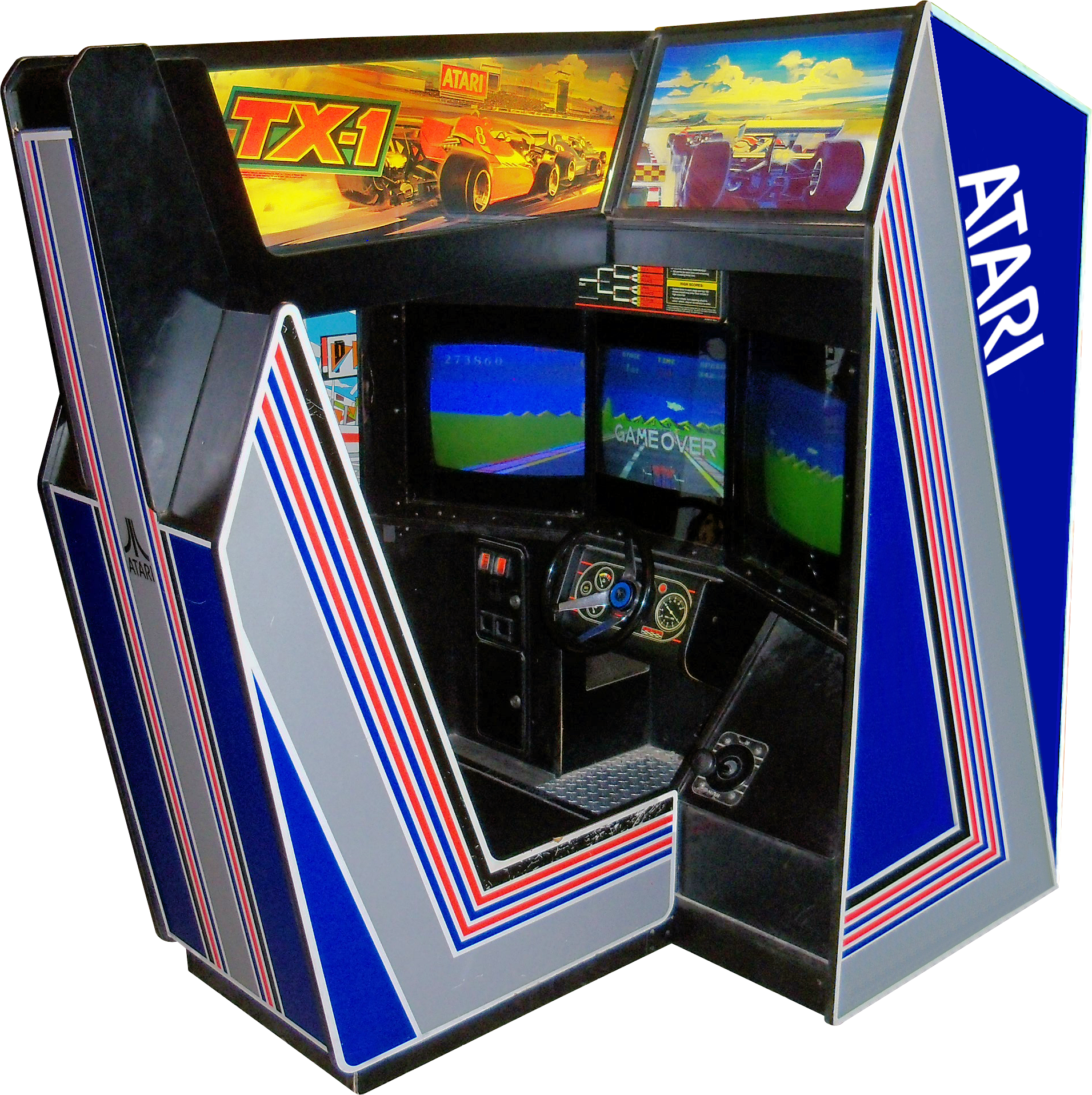
The most historically significant release was Tatsumi’s TX-1, a panoramic arcade racer that had remained tied to its original cabinet for more than four decades. Hamster’s Arcade Archives edition finally brought the game to current Nintendo, PlayStation and Xbox systems, while an unusual configuration discovered after launch provided suitably equipped players with a way to distribute its image across three separate displays.
Hardware and preservation projects supplied much of the remaining activity. SuperStation One received its delayed Console Mode interface, making the MiSTer FPGA-based system more approachable as a living-room console, while an experimental Mega-CD core arrived for Analogue Pocket with unusually detailed disclosure about its development process and known limitations. Retroid also began shipping the Pocket Nova, moving its 4:3 AMOLED Android handheld from promotional demonstrations into customer fulfilment.
British game history received its own important announcement through Gremlin Graphics Classics, a new heritage label being developed in collaboration with Gremlin co-founder Ian Stewart. Its proposed mixture of books, archival partnerships and new software suggests a broader attempt to organise the company’s history rather than simply place a familiar name on another compilation.
Community development remained equally visible. An unofficial wrapper added modern PC and Xbox support to the arcade version of Sega Rally Championship, a second Casio Loopy game received a complete English fan translation, and Atari announced plans for a new championship built around its classic catalogue. The week also produced an important correction when the developer of the Dreamcast version of Sonic Mania clarified that the technically advanced port had not yet been prepared for public release.
Taken together, these stories show why retro gaming news requires more careful language than a simple list of announcements. An officially licensed release, an experimental FPGA core, a public fan patch, a future tournament and an unfinished development branch may all be worth covering, but they carry very different expectations concerning availability, support, accuracy and completion.
Research period: 24–31 July 2026.
Publication dates and event dates were checked separately. Official releases, public community projects, experimental software, planned events and unfinished development work are identified clearly throughout the article.
The Week At A Glance
| Date | Development | Status | Why It Matters |
|---|---|---|---|
| 24 July | A new Sega Rally Championship arcade wrapper is released for PC and supported Xbox systems. | Unofficial release | Introduces modern display, controller and multiplayer options for Sega’s 1995 arcade racer. |
| 24 July | A public Mega-CD core becomes available for Analogue Pocket. | Experimental core | Extends openFPGA support into Sega’s CD-based hardware while documenting known compatibility issues. |
| 27–28 July | Retroid begins shipping the Pocket Nova. | Commercial shipping | The 4.5-inch 4:3 AMOLED Android handheld moves from pre-order promotion into customer fulfilment. |
| 28 July | Atari and Twin Galaxies announce plans for the Atari World Championships. | Early announcement | An online qualification tournament and live final are planned, although the full rules and schedule remain unconfirmed. |
| 28 July | The developer of the Dreamcast Sonic Mania port corrects reports that it has been released. | Development clarification | Shows why an advanced private or source build should not be confused with a prepared public release. |
| 29 July | SuperStation One Console Mode becomes publicly available. | Software release | Provides a more visual interface for the MiSTer FPGA-based system, including artwork-led browsing and per-game configuration. |
| 29 July | Gremlin Graphics Classics is announced. | Heritage label | Creates a coordinated home for archival work, books and new software connected with the Sheffield company’s history. |
| 29 July | I Want A Room In Loopy Town! receives a complete English fan translation. | Fan patch | Opens another part of the Casio Loopy’s small Japanese library to English-speaking players. |
| 30 July | TX-1 launches through Arcade Archives. | Official release | The 1983 three-screen racer receives its first known home release more than four decades after its arcade debut. |
The dates above refer to the development itself rather than only the publication date of the reporting.
Several stories continued to develop across the week as repositories, instructions and corrections appeared. The status shown reflects what could be verified by 31 July 2026.
TX-1 Receives Its First Known Home Release
Hamster’s release of Tatsumi’s TX-1 on 30 July is more significant than another arcade title joining a modern catalogue. Despite its importance to the development of panoramic racing games, the 1983 release had never received a known home conversion, leaving the original cabinet as the only authentic way to play it for more than four decades. Arcade Archives has finally made the game available on Nintendo Switch, Nintendo Switch 2, PlayStation 4, PlayStation 5 and Xbox Series X|S.
The original attraction was built around three monitors positioned side by side, creating a wide view of the road and surrounding scenery at a time when most arcade games remained confined to one conventional display. Its cockpit cabinet also used physical steering feedback, while the courses divided at junctions and carried the player through deserts, coastlines and city environments. Branching routes would later become strongly associated with Sega’s Out Run, but TX-1 had already demonstrated how a racing game could offer choices rather than one unchanging course.
Preserving The Panoramic Presentation
A standard home release cannot reproduce the scale, seat, steering mechanism and surrounding presence of the original cabinet, yet Hamster appears to have made an unusual effort to preserve more than the programme alone. Following release, arcade specialist AEX-RYU described a method of spreading the game’s panoramic picture across three HDMI displays by combining its screen-position settings with a suitable external video-wall controller.
This arrangement is not a simple option that most players can activate with three ordinary HDMI cables. It requires compatible displays, specialist external equipment and careful configuration, and it is intended for the game’s original mode rather than every score-based variation included in the package. A conventional television remains the practical way most customers will play, but the existence of the wider setup recognises that the original presentation was inseparable from the game’s identity.
The standard Arcade Archives version is available for Nintendo Switch and PlayStation 4, while Arcade Archives 2 covers Nintendo Switch 2, PlayStation 5 and Xbox Series X|S. Both editions provide configurable controls, save states and rewind, while the newer release adds Time Attack mode and support for variable refresh rate. These features increase accessibility but also separate the home release from a completely untouched 1983 cabinet, making it important to distinguish preservation of the original game from recreation of the entire physical installation.
Current status: officially released.
TX-1 is available on current consoles. Its three-screen presentation can be approximated at home, but doing so requires specialist external equipment and is not part of a normal single-display setup.
View The Official Arcade Archives TX-1 Page
SuperStation One Console Mode Is Released
SuperStation One received its delayed Console Mode interface on 29 July, giving the MiSTer FPGA-based system a more visual and console-like method of browsing games. The original MiSTer interface remains efficient for experienced users who understand cores, folders, system files and configuration menus, but it can feel closer to a technical launcher than a living-room console. Console Mode attempts to reduce that barrier without replacing the FPGA cores responsible for recreating the underlying hardware.

The interface organises games around artwork, screenshots and different library views rather than relying entirely on filenames and storage directories. Demonstrated features include on-device artwork scraping, large cover grids, captured-screenshot browsing, resolution switching, RetroAchievements support and the ability to store different core settings for individual games. That final feature is particularly useful because two games using the same hardware core may still require different region, memory, controller or display configurations.
A Publicly Documented MiSTer Distribution
Retro Remake’s public repository provides the installer, frontend, host software, dedicated menu core and update metadata required by the interface. Installation is handled through Install_Console_Mode.sh in the MiSTer scripts menu, although some releases also require supplementary Linux image and kernel files to be placed in the correct storage directory.
The repository also identifies the licensing applied to the different components and links to the corresponding GPL source projects. This is valuable because a console-style interface can otherwise become an opaque layer placed over an open hardware ecosystem. Clear installation instructions, source availability and licence information make it easier for users and developers to understand which components are being distributed and how they can be maintained.
Console Mode should still be judged as an interface rather than as evidence that every supported platform is reproduced perfectly. Accuracy remains dependent on the individual FPGA core, the quality of its implementation, the required BIOS or system files and the way the connected display and controller are configured. A polished library may make the hardware easier to use, but it does not correct an inaccurate core or remove compatibility differences between games.
The distinction between the SuperStation One base system and its separate Super Dock also remains important. The console can load preserved software from storage, but reading original PlayStation discs requires additional optical-drive hardware. Presenting the system as a direct physical-disc replacement without mentioning that requirement would give customers an incomplete picture of its capabilities.
Current status: publicly available.
Console Mode can now be installed through the published distribution. Its features and requirements may continue to change as development progresses.
View The Console Mode Distribution & Installation Guide
Gremlin Graphics Returns As A Heritage Label
Gremlin Graphics Classics was announced during the week as a new heritage label developed by Midnight Brew founder Allan Turvey in collaboration with Gremlin co-founder Ian Stewart. Rather than presenting the name as a simple revival for unrelated merchandise, the project is intended to bring together archival research, books, original contributors and new software connected with the company’s history.
Gremlin grew from the Just Micro computer shop in Sheffield during the early 1980s and became one of the defining British software houses of the 8-bit period. Games including Wanted: Monty Mole, Thing On A Spring, Bounder and Jack The Nipper established its early identity, while later releases including Zool, Lotus Esprit Turbo Challenge, Loaded and the Actua Sports series carried the company into 16-bit computers, consoles and the early 3D era.


Books, Archives & New Software
The initial programme places particular emphasis on Gremlin’s 8-bit years. Announced partners include archival and preservation groups, modern Spectrum and MEGA65 communities and publishers connected with contemporary editions of CRASH and ZZAP!. That combination creates the possibility of preserving more than finished commercial games by incorporating development material, contributor histories, artwork, prototypes and differences between platform versions.
One of the first planned publications is Gremlin Graphics Classics Volume One: The ZX Spectrum, with a later Commodore 64 volume expected to follow. Treating the platforms separately is valuable because their versions were not interchangeable simply because the box carried the same title. The machines differed in graphics, sound, memory organisation and programming technique, and their conversions were often produced by different people.
The label is also connected with Dreamtime Monty, a new Monty Mole game being developed for the ZX Spectrum Next. This places the project between archival work and active development: it continues a historical series while targeting a modern machine built around compatibility with the Spectrum tradition rather than attempting to imitate an unreleased 1980s product.
The credibility of the label will ultimately depend on attribution and documentation. Historical company names can easily overshadow the programmers, artists, musicians and designers who created the work. Direct involvement from Ian Stewart and established archive partners provides a promising foundation, but each release will still need to explain what is original, what has been restored and what has been created for the new label.
Current status: formally announced.
Gremlin Graphics Classics has identified books, partners and new software, with a wider public launch planned later in 2026. Complete release dates and product details remain to be confirmed.
Visit Gremlin Graphics Classics
Retroid Pocket Nova Shipping Begins
Retroid began shipping the Pocket Nova during the final week of July, moving the company’s new 4:3 Android handheld from pre-order promotion into customer fulfilment. The first batches were organised by colour, with black units scheduled to leave first before other finishes entered the shipping rotation.

The Nova’s central feature is its 4.5-inch AMOLED display, which combines a 4:3 aspect ratio with a 960p resolution and a refresh rate of up to 120 Hz. This format is particularly well suited to many arcade boards and television-based consoles whose software was designed around a squarer image. It allows PlayStation, Nintendo 64, Dreamcast and numerous earlier systems to use more of the display than they would on a wide 16:9 handheld.
That advantage should not be generalised across every platform. Game Boy Advance, PSP, widescreen modifications and dual-screen systems use different shapes, while some home-computer games were designed around resolutions that require their own scaling decisions. A 4:3 screen is a useful compromise for many systems rather than a universal solution.
Powerful Hardware Still Requires Good Software
Retroid lists a QCS8550 processor with an Adreno 740 GPU, either 8GB or 12GB of LPDDR5X memory and 128GB of UFS 3.1 internal storage. The system also includes a microSD slot, active cooling, analogue triggers, Hall-effect analogue sticks, Wi-Fi 7, Bluetooth 5.3 and a 5,000mAh battery.
These specifications place the device comfortably above the requirements of early cartridge consoles, but they do not prove that every later system will run perfectly. Emulation performance depends on the emulator, graphics driver, individual game, thermal behaviour and configuration. Two games from the same console can place very different demands on the processor, particularly when higher internal resolutions or experimental graphics backends are used.
Shipping production units should make more useful testing possible. Manufacturer footage can show that selected games run, but it rarely demonstrates sustained heat, battery life, standby behaviour, input latency or difficult titles under repeatable settings. Independent reviewers will need to disclose emulator versions and configuration if their results are to mean more than a collection of short demonstrations.
The official product page listed the base configuration from $229 at the time of research. Retroid has also warned that future component pricing may place pressure on the current price, but this should not be reported as a confirmed increase until the company changes the listing or issues a specific announcement.
Current status: shipping has begun.
Production units are entering customer fulfilment, while the official base price remained listed from $229 at the end of the research period.
View The Official Retroid Pocket Nova Specifications
Sega Rally Arcade Gains A Modern PC & Xbox Wrapper
Community developer Wanszai released version 1.0.0 of a new Sega Rally Championship project on 24 July, providing another way to run Sega’s 1995 arcade racer on Windows PC, Xbox 360 and supported newer Xbox hardware. The project follows similar work around Virtua Racing and focuses on the arcade game rather than recreating the Saturn, PC or later console conversions.
That distinction matters because the home versions of Sega Rally Championship were not identical copies of the Model 2 arcade original. Resolution, frame rate, visual detail, handling and additional features differed between releases. A wrapper built around the arcade data is therefore attempting to modernise the cabinet software rather than selecting one existing home conversion as its foundation.
Modern Features Around Arcade Data
The project introduces options for contemporary displays, controllers and racing wheels, including 4:3 and widescreen presentation, configurable scaling, CRT-style filters and support for force-feedback devices. Online racing is also included, allowing up to four players to compete across supported versions.
These additions increase the game’s usefulness for a scattered modern audience, but they are not original 1995 features. Internet multiplayer requires new synchronisation and networking work around software designed for local linked cabinets, while widescreen presentation can change the visible field or placement of interface elements. The project is best understood as a modern wrapper around preserved arcade data rather than an untouched reproduction.
The downloadable release does not include Sega’s commercial game image. Users must supply compatible data themselves and follow platform-specific setup instructions. Xbox Series use depends on Developer Mode, while Xbox 360 installation requires hardware capable of running unsigned community software.
Its unofficial status should remain prominent. Sega and Microsoft have not released it as a commercial port or backward-compatible product, and community releases cannot provide the same guarantee of long-term updates or customer support. Their value lies elsewhere: in restoring convenient access, documenting the arcade programme and adding functions that a commercial publisher may never prioritise.
Current status: version 1.0.0 is publicly available.
It is an unofficial community project requiring separate arcade game data and platform-specific configuration.
View The Sega Rally Championship Project Release
Mega-CD Arrives On Analogue Pocket
Developer obrien654j released an experimental Mega-CD and Sega CD core for Analogue Pocket during the week, extending openFPGA support beyond the cartridge-based Mega Drive. The project combines work from an existing Analogue Pocket Genesis core with components derived from the MiSTer Mega-CD implementation and other earlier FPGA projects.
Reproducing the Mega-CD involves considerably more than connecting a virtual disc image to a Mega Drive core. Sega’s expansion contains another Motorola 68000 processor, additional memory, CD-control hardware, PCM audio and dedicated scaling and rotation functions. The implementation must coordinate those components with the Mega Drive’s processor, video system and sound hardware while also reproducing disc access and system BIOS behaviour.
A Public Core With Clear Limitations
The repository provides a downloadable release and explains the required setup. Users must supply a compatible BIOS, place it in the correct asset directory, select a CUE-based disc image and format the system’s internal backup memory during the first boot. The project does not distribute Sega’s BIOS or commercial games.
Known limitations are documented rather than hidden. Certain games exhibit video or audio stutter, internal save memory requires careful preparation and support for the separate backup RAM cartridge has not yet been implemented. The developer has also explained that parts of the CD-drive emulation were rewritten with Genesis Plus GX used as a behavioural reference after earlier approaches produced accuracy problems.
AI-Assisted Verilog & Independent Review
The most unusual element is the developer’s direct disclosure that Claude generated the Verilog code through an extended process of prompting, simulation, testing and debugging. The developer is an experienced software engineer but does not claim expertise in hardware-description languages and explicitly states that they cannot independently assess the quality of the generated Verilog.
That honesty makes it possible to discuss the project without collapsing into either dismissal or uncritical promotion. A core that boots and runs games has achieved something meaningful, particularly on hardware with limited FPGA resources. It does not follow that the implementation is cycle-accurate, maintainable or free from timing problems that appear only under particular games or edge cases.
FPGA logic describes hardware operating in parallel rather than an ordinary sequence of application instructions. A design can produce correct visible results in selected tests while still containing synthesis assumptions or timing behaviour that experienced HDL developers would want to examine. Public source, reproducible testing and comparison with original hardware will therefore be essential if the core is to mature beyond an experimental release.
Current status: publicly installable but experimental.
The core runs Mega-CD software and includes detailed setup notes, but compatibility issues remain and its AI-assisted implementation requires continued testing and independent technical review.
View The Mega-CD Analogue Pocket Core
A Second Casio Loopy Game Is Translated Into English
Fan translator SeriaMau released a complete English patch for I Want A Room In Loopy Town! on 29 July, opening another part of the Casio Loopy’s small Japanese library to English-speaking players. The Loopy was released only in Japan during 1995 and was marketed primarily towards girls and young women, with a built-in thermal colour printer that could produce stickers from game images.


The game is an early domestic life simulation in which the player works jobs, earns money and purchases furniture and decorations. Holidays, seasonal changes and the passage of time shape the experience, with the player given one in-game year to develop the room before the scenario ends. Its reliance on Japanese text made it difficult to understand through experimentation alone, giving the translation practical value beyond replacing menu labels.
Two Ways To Experience The Game
The patch is available in two versions. One retains the original economy, while an optional alternative multiplies job income so that players can reach more furniture, events and decorative options without repeating the same work as often. Providing both versions separates language access from an additional quality-of-life change rather than silently rewriting the game’s balance.
SeriaMau states that the script was translated manually using their knowledge of Japanese, with graphics edited through conventional image tools. Claude-assisted code was used during parts of the disassembly and reassembly process surrounding the poorly documented Hitachi SH-1 hardware, but not to generate the translated writing.
This distinction is important because the phrase AI-assisted can describe very different activities. Translating dialogue, generating replacement artwork and helping analyse binary code are not interchangeable processes. Good documentation should identify exactly where a tool was used, who reviewed the output and whether another developer can reproduce the patching method.
The translation is distributed as a patch rather than as a complete game image. Players need a compatible copy of the original software and must apply the patch themselves. LoopyMSE is recommended for emulation and has continued improving its reproduction of the console’s display, sound and unusual printer behaviour.
Current status: complete fan translation released.
It is an unofficial localisation requiring the original game data. Players can choose between the original economy and an optional faster-income version.
View The I Want A Room In Loopy Town! Translation
View The LoopyMSE Emulator Releases
Atari & Twin Galaxies Announce A New Championship
Atari and Twin Galaxies announced plans on 28 July for an Atari World Championships competition built around five games from Atari’s catalogue. The proposed format begins with open online qualification before advancing successful players towards an in-person grand final.
Twin Galaxies has been associated with arcade score tracking since the early 1980s and remains one of the most recognisable names attached to competitive classic gaming. Its history also contains disputed scores and controversies from earlier ownership periods, making clear rules and evidence standards particularly important for any new event carrying the organisation’s name.
The Rules Will Determine The Event’s Value
The initial announcement does not yet provide a complete list of the five games, the exact versions to be used or a final tournament schedule. These details cannot be treated as minor administrative information because an arcade release, Atari 2600 conversion and modern compilation may behave differently even when they share the same title.
A credible online championship will need to define the permitted hardware, controller types, emulator or compilation settings, pause rules, recording requirements and methods used to investigate disputed submissions. Online qualification also creates a choice between recorded runs, live monitored play or a standardised competition client, each carrying different technical and practical limitations.
The broad idea nevertheless has potential. Speedrunning and fighting-game tournaments have made performance on older games visible to large audiences, while traditional arcade score competition has become more specialised. A well-organised Atari event could introduce score-based play to newer competitors, provided the organisers publish sufficiently precise rules and avoid relying on famous game names alone.
Current status: announced, with major details still to come.
Online qualification and a live final are planned, but the complete game list, schedule, rules, supported versions and entry process had not been confirmed by 31 July.
Read The Atari World Championships Announcement
Sonic Mania Dreamcast Port Is Not Released Yet
Confusion spread during the week after a video described the unofficial Dreamcast version of Sonic Mania as finished and released. Developer Michael Fadely, also known as SonicFreak94, issued a correction explaining that the port is functionally advanced but has not yet been prepared for public distribution.
The project is based on the community decompilation of Sonic Mania’s Retro Engine implementation. A decompilation reconstructs usable source code from a finished programme rather than recovering Sega or the original developers’ private source repository. Considerable Dreamcast-specific work has still been required to adapt the engine, graphics, memory use and controls to Sega’s hardware.
Functionally Advanced Does Not Mean Released
Public demonstrations show that substantial parts of the game are running, including the three-dimensional special stages that place heavier demands on the Dreamcast’s PowerVR graphics hardware. Reaching that point makes the project more than a simple title-screen experiment, but a public release requires additional work that is easy to overlook from video footage alone.
Build instructions must be reproducible, required tools and dependencies need to be documented, save behaviour must be tested and remaining faults should be recorded. The developers must also determine what can be distributed legally, because the decompilation does not include the copyrighted assets required to run the game.
The project’s repository explicitly states that users need assets from an officially obtained copy of Sonic Mania or Sonic Mania Plus. The decompilation is not intended to act as a replacement download or a method of distributing Sega, Headcannon or Evening Star’s commercial data.
The correction matters beyond this one project. Community development branches, private test builds and videos supplied by developers are frequently described as releases even when no ordinary user can build or run them. Publishing that description creates false expectations, wastes readers’ time and places pressure on unpaid developers to provide downloads or support they never announced.
Current status: not publicly released.
The Dreamcast port is functionally advanced, but formal release materials and updated build instructions are not ready. Reports claiming that the finished port is already available are incorrect.
View The Sonic Mania Dreamcast Development Branch
What This Week Shows About Retro Gaming
The week’s developments cover machines separated by more than forty years, from a panoramic 1983 arcade cabinet to an Android handheld entering production in 2026. They nevertheless share a central concern: making older games easier to access without pretending that every modern method recreates the original experience in exactly the same way.
Preservation Includes Hardware, Presentation & Context
TX-1 demonstrates why preserving the programme alone can leave part of an arcade game behind. Its three displays, cockpit controls and physical steering feedback helped define the experience. Hamster’s home release cannot reproduce the complete cabinet, but its support for a specialist multi-display arrangement preserves more of the original presentation than an ordinary single-screen conversion.
The Casio Loopy translation presents the same problem from a different direction. Recovering and emulating the game data is essential, but the console’s printer, Japanese-language interface and unusual target audience form part of its history. A patch makes the software more accessible while documentation and emulator development attempt to preserve the hardware around it.
Convenience Can Support Preservation
Console Mode shows that an accurate hardware recreation may still remain unused when its interface is too technical for the intended audience. Artwork-led browsing and per-game configuration do not make an FPGA core more accurate, but they reduce the friction involved in finding and starting software correctly.
The Sega Rally wrapper follows a similar principle. Modern display support, wheel configuration and online play change the original arcade environment, yet they may also be the reason players can organise races around the game at all. Preservation and convenience are not automatically opposed; the important requirement is to describe what has changed.
Community Projects Need Precise Status Labels
The Mega-CD core, Loopy patch, Sega Rally wrapper and Dreamcast Sonic Mania branch are all unofficial projects, but they are not at the same stage. One is experimental software with documented compatibility issues, one is a complete translation patch, one is a downloadable version 1.0 release and one is an advanced project not yet prepared for public use.
Reporting all four as simply released would remove information readers need before trying them. Clear descriptions protect users from incorrect expectations and protect developers from demands created by inaccurate coverage.
AI Disclosure Needs More Detail Than A Label
The Mega-CD core and Loopy translation both used Claude-assisted code, but the tool was applied to different work. In the FPGA project it generated Verilog under extensive testing and debugging, while the translation project used assistance during reverse engineering around a manually written English script.
The useful questions are therefore not limited to whether AI was involved. Readers need to know what it produced, who reviewed it, how the result was tested and whether another developer can understand and maintain the work. Detailed disclosure allows those questions to be answered without dismissing an entire project or treating a working demonstration as proof of technical quality.
Historical Brands Are Becoming Active Again
Gremlin Graphics Classics and the Atari championship both show older names being used for present-day projects. The strongest revivals do more than repeat familiar logos: they identify the original contributors, explain which rights are involved and create something that adds to the historical record.
Gremlin’s proposed combination of archives, books and new development has the potential to do this well, while Atari’s tournament will depend on the clarity of its versions, rules and score-verification methods. Recognition alone is not enough; a revived name must be supported by credible organisation.
Retro Hardware Remains Part Of The Current Electronics Market
The Pocket Nova may be designed around older game libraries, but it is a modern Android product affected by processor supply, manufacturing costs, software support and international fulfilment. Its success will depend as much on firmware, cooling, controls and long-term updates as on the historical systems it can emulate.
This is one reason the modern retro market cannot be separated neatly from current technology. FPGA boards, Android handhelds, replacement optical drives and video scalers all use contemporary components to keep older software practical, leaving them exposed to the same supply and support problems as any other electronics product.
The week’s central theme was practical access supported by honest documentation.
Official publishers, hardware manufacturers, heritage groups and individual developers all found different ways to make older games easier to purchase, understand, configure or run. Their value depends on explaining what has been preserved, what has been changed and which limitations still remain.
Research Sources & Further Reading
Research prioritised official product pages, public repositories and developer documentation. Specialist reporting was used where direct statements, event details or release clarifications were not available through a permanent official page.
-
Arcade Archives – TX-1
Official release date, platforms, game description, modes and pricing information for Tatsumi’s 1983 arcade racer. -
Time Extension – TX-1 Three-Screen Setup
Reporting on the external equipment and configuration used to divide the panoramic image across three displays. -
Retro Remake – Console Mode Distribution
Installation instructions, release components, licences and source links for SuperStation One Console Mode. -
Gremlin Graphics Classics
Official home of the new Gremlin heritage label and its announced projects. -
The Gremlin Graphics Archive
Independent archive documenting Gremlin games, publications, contributors and company history. -
Retroid – Pocket Nova
Official specifications, configurations, listed pricing and shipment information. -
Wanszai – Sega Rally Championship Version 1.0.0
Public project release for Windows PC and supported Xbox systems. -
Mega-CD For Analogue Pocket
Public source, setup guide, development disclosure and known limitations for the experimental openFPGA core. -
I Want A Room In Loopy Town! English Translation
Translation patch, alternative economy version and project documentation. -
LoopyMSE
Emulator releases covering Casio Loopy graphics, sound and printer behaviour. -
Atari World Championships Announcement
Initial information concerning the planned online qualification and live final. -
Sonic Mania Dreamcast Development Branch
Public source branch for the unofficial Dreamcast implementation and its commercial-asset requirements. -
Sonic Mania Dreamcast Release Clarification
Developer confirmation that the port is functionally advanced but has not yet been formally released.
More From Retrolize
Continue exploring retro gaming hardware, preservation, game history and modern ways to use older systems.